Curiosity / Fear & Reassurance

What Do You Actually See During Cataract Surgery?

The question almost every patient asks. The honest answer: you won't see what you think you will, and that is a good thing.

The first time someone tells you that you will be awake during cataract surgery, a very specific fear sets in. You imagine seeing everything. The instruments. The cuts. The moment your lens is removed. You picture yourself as a witness to your own surgery, unable to look away, locked in place while the procedure happens in front of you.

I hear this worry constantly. In consultations. In pre-operative calls. In messages from patients the night before surgery. The question is always phrased differently, but it is always the same question: What am I going to see?

So here is the truth, as clearly as I can give it: you will not see what you are worried about. You will not see instruments coming at your eye. You will not see the surgeon's hands. You will not see sharp objects, incisions, or anything that resembles the medical illustrations in a textbook. What you will see, if you see anything clearly at all, is mostly just light.

Let me explain why, and what patients actually report.

Why You Can't See Sharp Images During Surgery

Your eye works like a camera. To see something clearly, light has to pass through your cornea, through your lens, and focus precisely on your retina. During cataract surgery, several things prevent that from happening.

First, your eye is anesthetized. You are not moving it. The surgeon is controlling the position. You are not focusing on anything because your eye is not trying to focus. It is relaxed, held steady, and numbed.

Second, the very thing that allows you to see clearly in normal life, your natural lens, is the thing being removed. Once the cataract is broken up and the lens material begins to come out, your eye loses its ability to focus. You are essentially looking at the world through an eye that no longer has a lens in it. Everything becomes a blur.

Third, and most importantly, the instruments used in cataract surgery are incredibly small and incredibly close to your eye. They are working at a microscopic level, often just millimeters from the structures inside your eye. Even if your eye could focus, you physically cannot focus on something that close. It would be like trying to read a book held one inch from your face. You would see color and light, but no detail.

What this means in practice is that the terrifying image in your head, the one where you watch a blade approach your eye in high definition, is not physically possible. Your eye cannot create that image. The equipment, the anesthetic, the loss of your natural lens, and the proximity of the instruments all prevent it. You are awake, yes. But you are not seeing the surgery the way you imagine it.

What Patients Actually Report Seeing

I have asked this question to thousands of patients after surgery. The answers are remarkably consistent. Here is what people say.

Bright Light

Almost everyone sees light. The surgical microscope is positioned directly over your eye, and it is bright. Not painfully bright, because your eye is anesthetized and your pupil is dilated, but bright enough that it dominates your visual field. Many patients describe it as a soft white or yellowish glow. Some say it felt like looking up at a cloudy sky on a sunny day.

Colors and Shapes

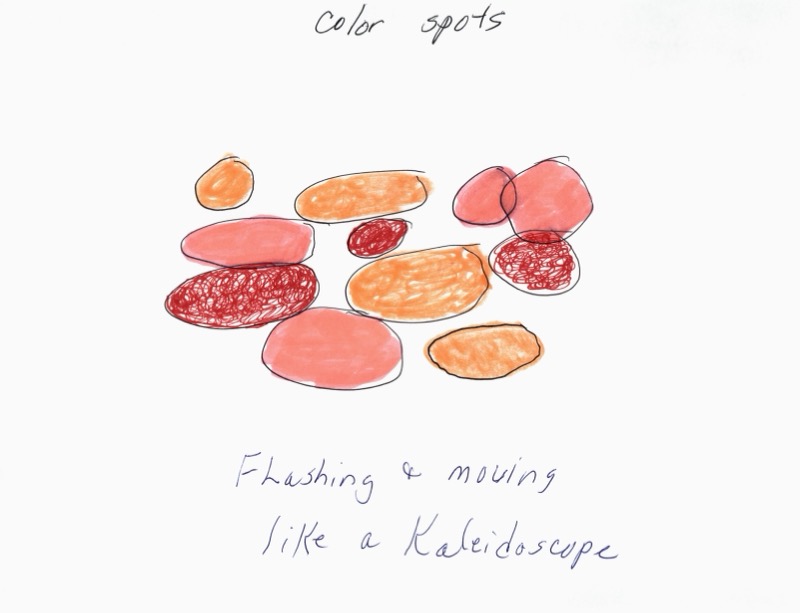
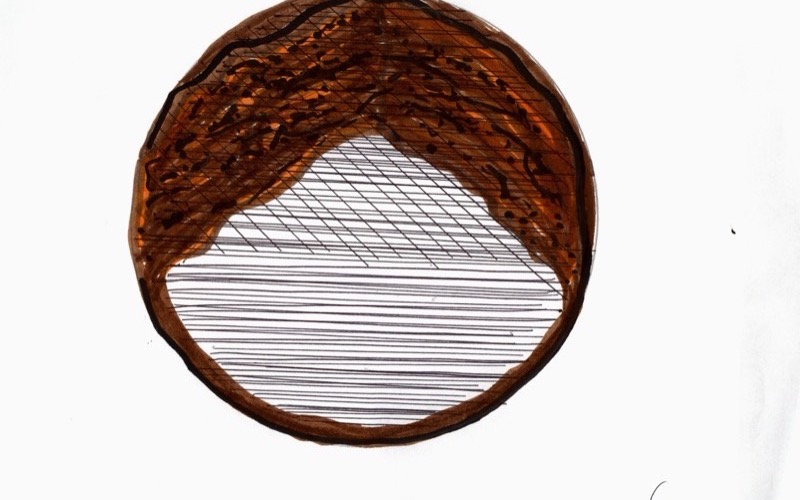
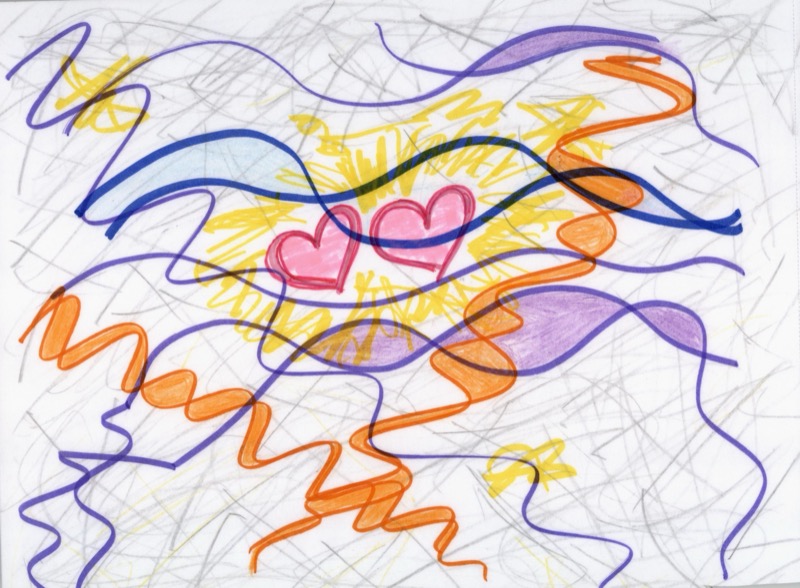
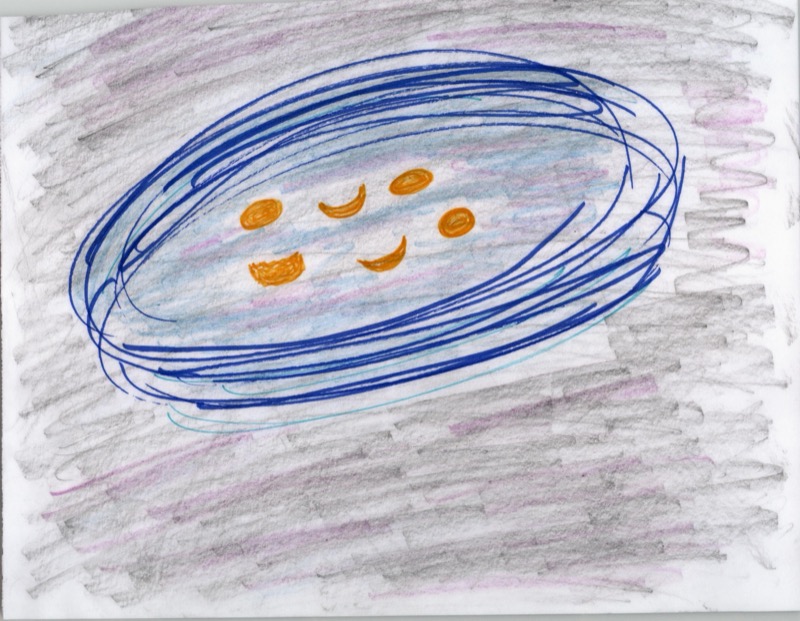
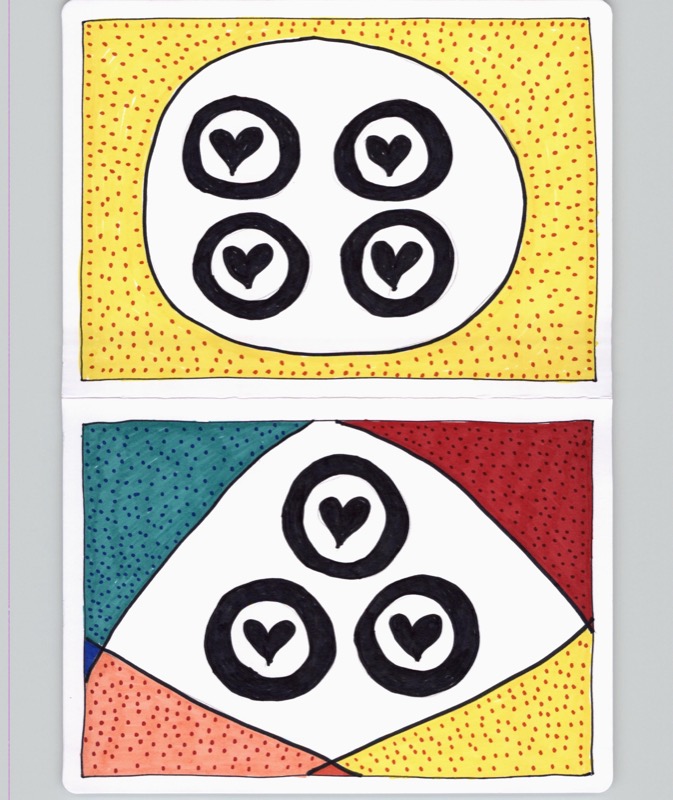
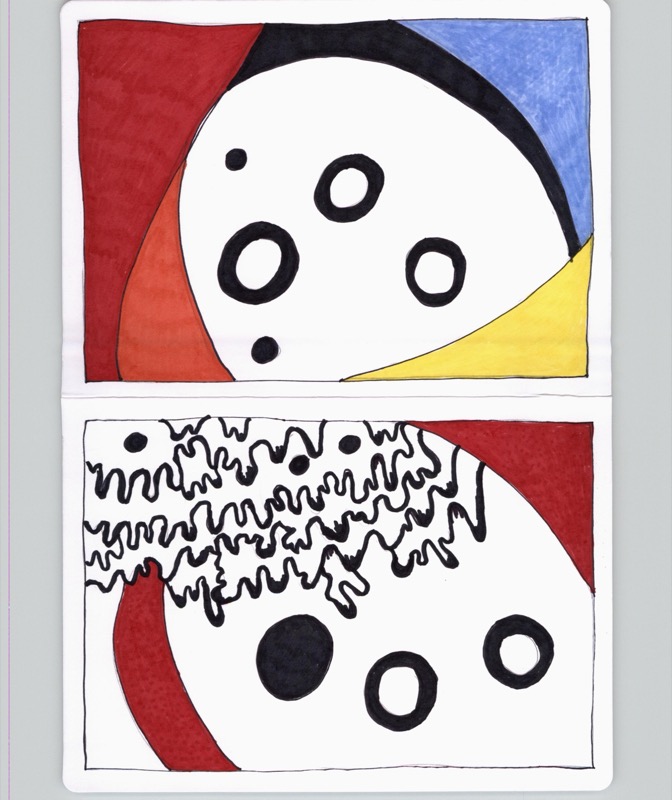
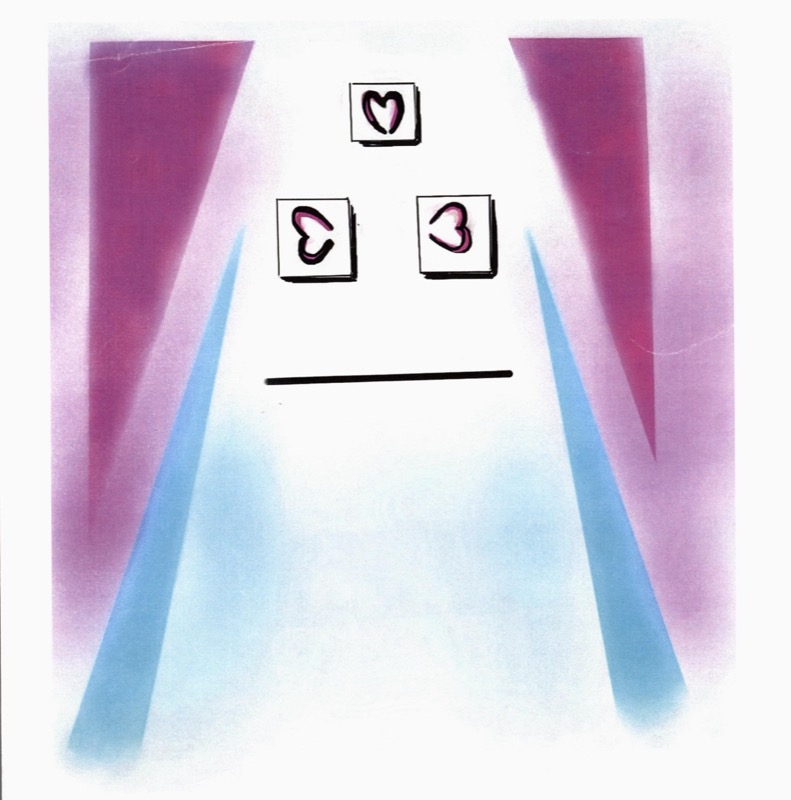
Some patients see colors. Blues, oranges, whites, sometimes a shifting pattern of color as the surgeon works. A few describe it as kaleidoscopic, not in a sharp geometric way, but in a soft, abstract way. Shapes may appear, usually blurred circles or ovals. None of it is sharp. None of it is recognizable as a surgical instrument. It is more like watching light move through water.

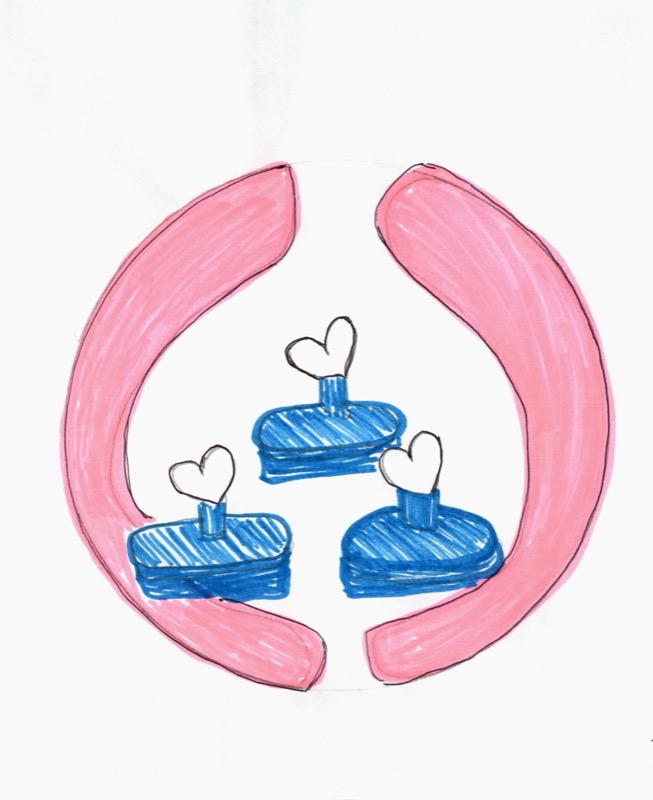
Patient drawing: geometric hearts and pink-blue light tunnel during cataract surgery
Patient drawing: pink curves with blue shapes and hearts seen during cataract surgery
Patient drawing: orange-pink kaleidoscope color spots during cataract surgery
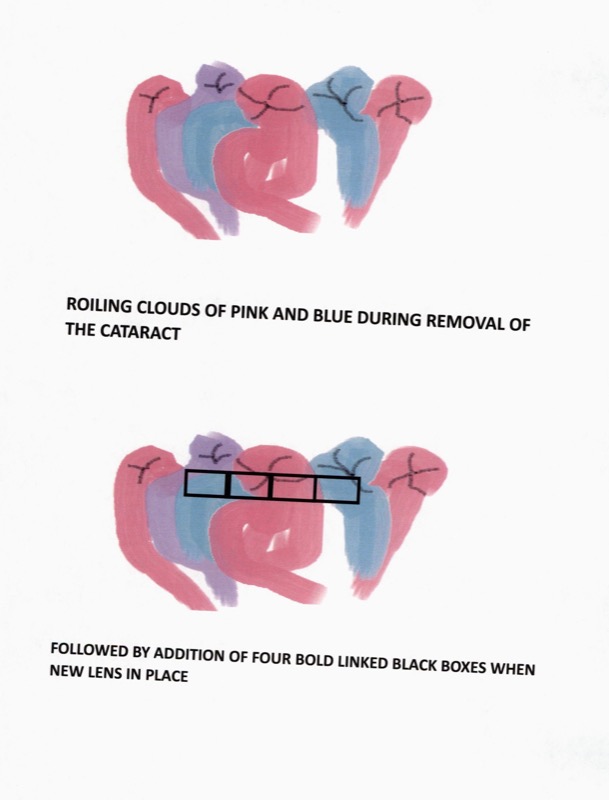
Patient drawing: roiling lavender-pink clouds seen during cataract surgery

Drawn by patients after their cataract surgery

One patient told me: "I kept waiting to see something scary. I never did. It was just light and color, kind of pretty actually. I remember thinking, that's it? This is what I was so worried about?"

Shadows and Movement

A few patients report seeing shadows or a sense of movement, like something passing in front of the light. This is normal. The surgeon's hands, the instruments, and the irrigation fluid all create shadows. But again, these are not sharp images. They are vague, fleeting, and most patients describe them as non-threatening. Several have compared it to looking at shadows through a shower curtain.

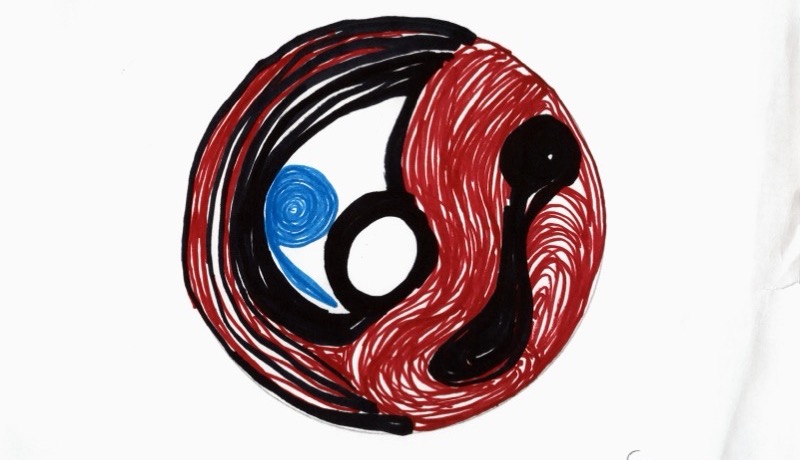
Patient drawing: red-black circular turbulence with blue spiral during cataract surgery
Patient drawing: dark amber textured horizon circle during cataract surgery

Drawn by patients after their cataract surgery

Almost Nothing

Some patients, particularly those who receive stronger sedation or who have denser cataracts, report seeing almost nothing at all. They are aware that the procedure is happening, they hear voices and feel gentle pressure, but visually, the experience is dim or blank. They describe it as dreamlike, distant, or as if it happened to someone else.

The most common reaction I hear after surgery is surprise. Patients expected to see more. They expected to feel more. They were bracing for something vivid and unsettling, and what they got instead was abstract, brief, and far less intense than they imagined.
What About the Pain?

This always comes up alongside the question about what you see. If you are awake, does it hurt?

No. The eye is one of the most sensitive parts of the body, but it is also one of the easiest to anesthetize effectively. We use numbing drops, and in some cases a small injection of anesthetic around the eye. By the time surgery begins, you do not feel pain. You may feel touch. You may feel pressure. You may be aware that something is happening. But you do not feel pain.

Patients describe the sensation as strange but not painful. A sense of something pressing lightly on the eye. A feeling of coolness from the irrigation fluid. Awareness without discomfort. Many patients say they felt nothing at all. A few say they felt a brief moment of pressure during lens insertion, but even that is not painful, just unusual.

If at any point during surgery a patient reports discomfort, we can administer more anesthetic. Pain is not part of the process. Anxiety and anticipation, yes. Pain, no.

Why We Don't Use General Anesthesia

At this point, many patients ask: if being awake is so unsettling for people, why not just put them to sleep?

The answer is that general anesthesia carries risks that local anesthesia does not. Cataract surgery is a short, low-risk procedure. Putting a patient fully under anesthesia introduces risks related to breathing, blood pressure, and post-operative confusion, especially in older patients. It also requires a longer recovery period and more intensive monitoring.

Local anesthesia, by contrast, is safe, fast-acting, and wears off quickly. Patients can go home within an hour of surgery. They are alert, oriented, and able to follow post-operative instructions immediately. The trade-off, being awake during the procedure, sounds worse than it is. The visual experience is minimal, the duration is short, and the anesthetic prevents pain.

For the vast majority of patients, once the procedure is over, they understand why local anesthesia was the right choice. The fear of being awake is larger than the reality of being awake.

The 10 Minutes Everyone Worries About

Cataract surgery typically takes 10 to 15 minutes per eye. That includes making the incisions, breaking up the cataract with ultrasound, removing the lens material, inserting the new lens implant, and ensuring everything is stable. It is a short procedure. But when you are lying on the table, waiting for it to begin, those minutes can feel longer than they are.

Most of my pre-operative conversations are not about the surgery itself. They are about managing the anticipation. Patients are not afraid of the surgery. They are afraid of the moment before the surgery starts, when they are awake, aware, and waiting.

A retired school principal told me: "I was terrified right up until the moment it started. Then I realized I couldn't see anything scary, I couldn't feel anything painful, and it was already halfway done. I had worked myself up for nothing."

Patient drawing: chaotic energy with yellow glow, pink hearts, and purple waves during cataract surgery
Patient drawing: blue vortex with orange fragments during cataract surgery

Drawn by patients after their cataract surgery

That is the most common post-operative sentiment I hear. Not that it was easy, though many say that. But that it was easier than expected. The gap between what patients feared and what they experienced is often enormous.

I tell every patient the same thing: the fear is real, and it is valid. But the fear is based on an image in your head that does not match the reality of the procedure. You will not see what you think you will see. You will not feel what you think you will feel. And when it is over, most patients are surprised by how undramatic the whole thing was.

What Helps the Most

If the idea of being awake during surgery still feels overwhelming, here are the things that patients tell me made the biggest difference.

Knowing What to Expect

The unknown is always worse than the known. Patients who understand what they will see, or more accurately, what they will not see, report lower anxiety. That is why I spend time in every consultation explaining this in detail. It is not about convincing you the procedure is easy. It is about replacing the terrifying image in your head with an accurate one.

Sedation Options

We offer mild sedation for patients who want it. This does not put you to sleep, but it takes the edge off. You remain awake and able to follow instructions, but you feel calmer and more relaxed. Many patients choose this option, and most say it made the experience significantly easier. Some report that the procedure felt like it passed in a blur, even though they were technically awake the entire time.

Trusting the Process

This sounds abstract, but it matters. Cataract surgery is one of the most commonly performed surgeries in the world. Tens of millions of people have been through it. The technique is refined, the outcomes are predictable, and the anesthetic works. You are not the first person to be afraid. You are not the first person to wonder what you will see. And you will not be the first person to come out the other side and say, "that was not as bad as I thought."

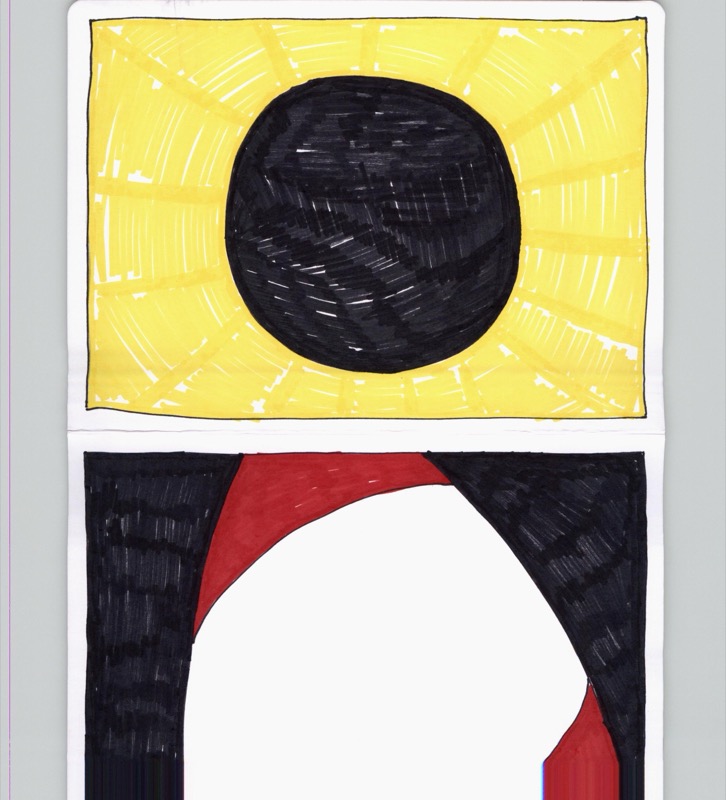
Patient drawing: bold black circle on yellow sunburst during cataract surgery
Patient drawing: pop art hearts with dot grids during cataract surgery
Patient drawing: fluid forms with dripping patterns during cataract surgery

Drawn by patients after their cataract surgery

A thought from the clinic

I have performed over 20,000 cataract surgeries, and I have never had a patient tell me afterward that the visual experience during surgery was traumatic. I have had patients say it was strange. I have had patients say it was boring. I have had patients say they barely remember it. But the thing they were afraid they would see, the sharp, vivid, disturbing image of their own surgery, that does not happen. The eye does not work that way. The procedure does not work that way. And knowing that, really understanding it, is often the thing that finally allows patients to move forward.

The Complete Collection: Patient Artwork Gallery

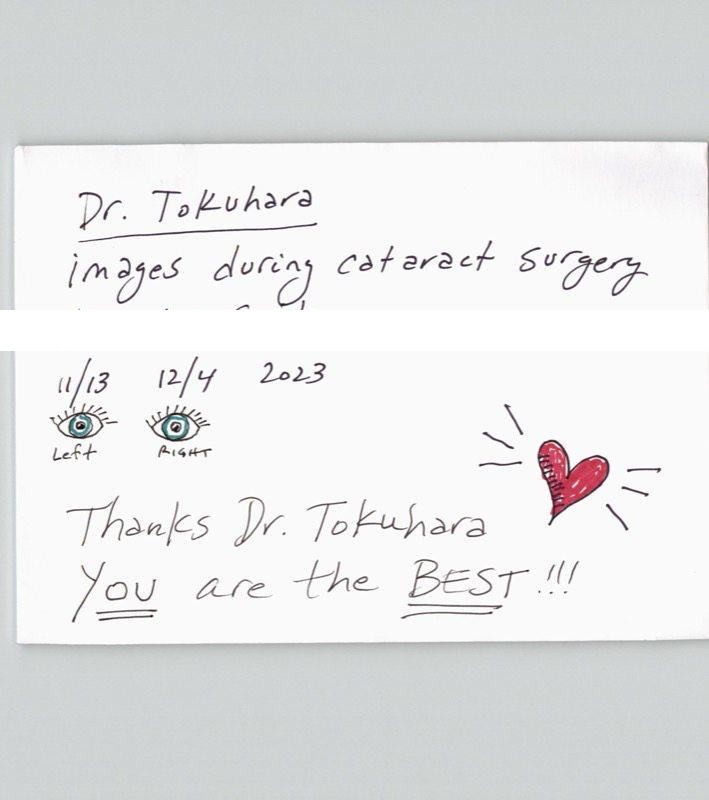
Several of my patients who are artists have sketched what they saw during their cataract surgery. These drawings, created independently by different patients, reveal something remarkable: the consistency of the experience. Kaleidoscopic patterns, hearts, orbs, turquoise and gold light, tunnels of color. Nothing frightening. I show these to anxious patients before surgery to demonstrate that the reality is not a surgical scene, it is a beautiful light show.

These drawings are evidence of something I tell every nervous patient: the experience is not what you fear. Multiple people, working independently, all drew versions of the same thing. Hearts. Circles. Flowing colors. Light moving through space. What you see during cataract surgery is closer to watching an animated film than witnessing a medical procedure. And that is exactly what I want you to understand before you arrive.

Still Have Questions?

If you are still unsure about what to expect during cataract surgery, the best thing you can do is ask. We will walk through the entire process, answer every question, and make sure you feel prepared before the day arrives.

Schedule a Consultation

Related Reading