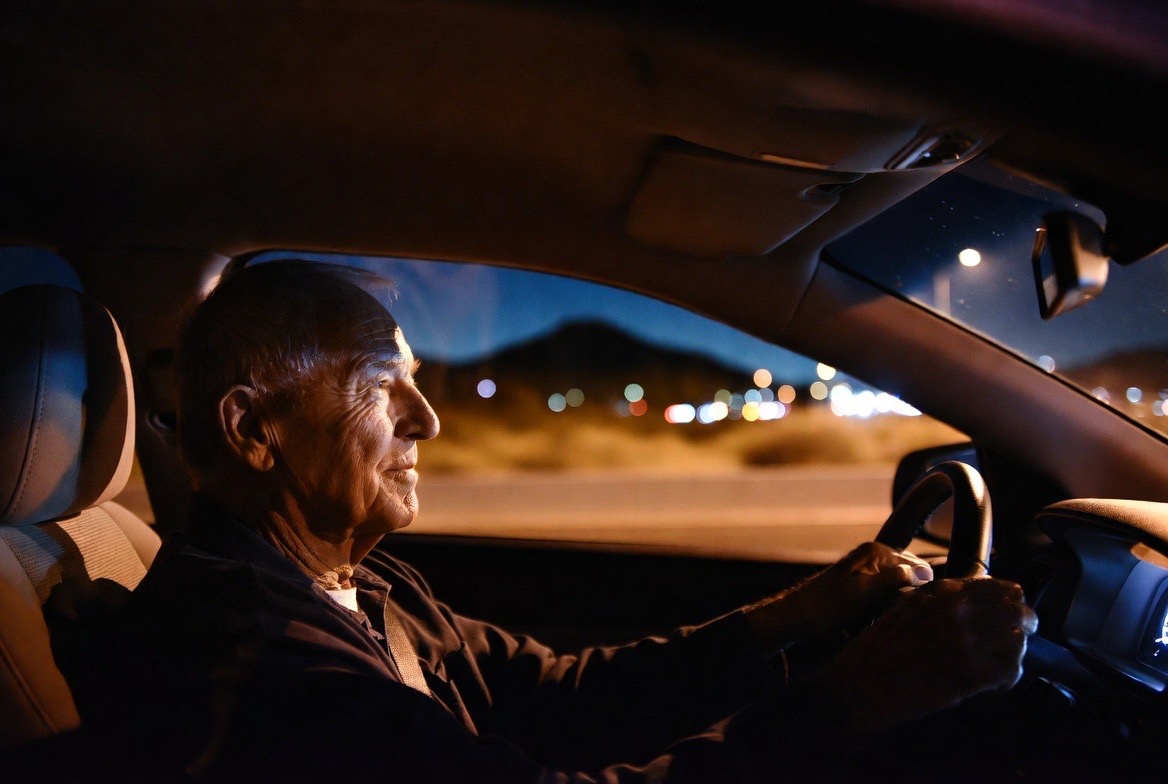
Almost every lens consultation includes the same moment. I ask the patient what matters most to them about their vision after surgery, and they say some version of the same thing: "I need to be able to drive at night."
Not reading. Not golf. Not close-up work. Night driving. It comes up more than any other single concern, and for good reason. Night driving is where lens choice matters most. It is where the optical differences between lens types become visible, literal, and unavoidable. Halos around headlights. Glare from streetlights. A sense that your vision is sharp during the day but somehow compromised after dark.

The problem is that the conversation around lens implants is often dominated by features. Multifocal. Extended Depth of Focus. Toric. Patients are handed brochures with glossy images and terms that sound impressive but do not clearly answer the question they actually care about: Which lens will let me see clearly at night?
So let me answer that question as directly as I can, based on 20 years of cataract surgery, thousands of lens implants, and real patient feedback about what actually happens when they drive home after dark.
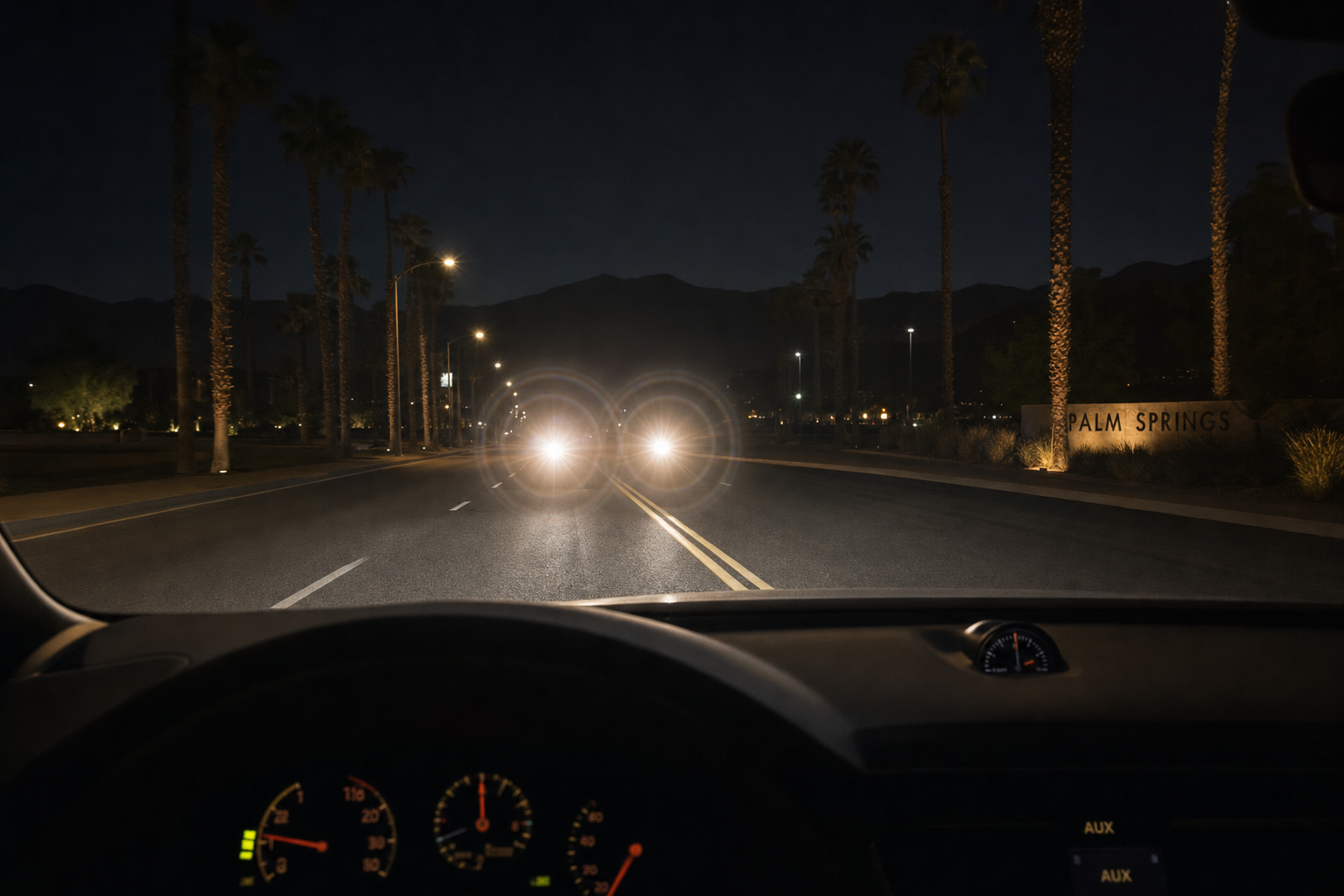
Your eye behaves differently at night. In daylight, your pupil is small. Light enters through a narrow opening, which helps your eye focus sharply and reduces optical imperfections. At night, your pupil dilates. More light enters, but so does more optical noise. Small imperfections in the lens, tiny variations in how light is refracted, all of that becomes more visible when your pupil is wide open.
This is why some people who see perfectly during the day struggle with glare, halos, or starbursts at night. It is not that their vision is bad. It is that the larger pupil exposes optical characteristics that do not matter in bright conditions but become noticeable in low light.
This matters for lens choice because different lens designs create different optical profiles. Monofocal lenses have a single focal point. Multifocal lenses split light into multiple focal points. Extended Depth of Focus lenses stretch a single point into a range. Each of those designs creates a different visual experience at night, and not all of them are compatible with confident, comfortable night driving.
If night driving is a priority for you, and for most people it is, then understanding these differences is not optional. It is the single most important part of choosing the right lens.
A monofocal lens has one focal point. It is designed to give you sharp, clear vision at one distance, typically set for far away. For night driving, this is the gold standard. Monofocals produce the least glare, the fewest halos, and the sharpest image quality in low light. If your primary concern is seeing the road clearly after dark, a monofocal lens is the safest choice.
The trade-off is that you will need reading glasses. You will also likely need glasses for intermediate tasks like using a computer. But distance vision, the kind you use for driving, will be crisp, predictable, and free of the optical artifacts that other lenses can introduce.
A retired airline pilot told me: "I need to see the road the way I used to see the runway. No halos. No guessing. Just clear. I'll wear readers for the rest of my life if it means I can drive at night without second-guessing myself."
Monofocals are not glamorous. They do not promise freedom from glasses. But they deliver what they are designed to deliver, and for patients who drive frequently at night, especially in rural areas or on poorly lit roads, that reliability matters more than any premium feature.
If you have astigmatism, a toric monofocal is often the best choice for night driving. Astigmatism causes light to blur and streak, which is especially noticeable around headlights and streetlights at night. A toric lens reduces that astigmatism, sharpening the image your eye receives. You still get the clean optical profile of a monofocal, but with the added benefit of corrected astigmatism. Most patients with significant astigmatism report that the toric correction dramatically improves their night vision quality.
Multifocal lenses are designed to give you vision at multiple distances, near, intermediate, and far, without glasses. They work by splitting incoming light into different focal zones. This allows you to read a menu, use a computer, and see across a room, all with the same lens.
The downside is that splitting light creates optical compromises. At night, many patients with multifocal lenses see halos or rings around lights. Headlights. Streetlights. Taillights. The effect is especially noticeable in the first few months after surgery. Some patients adapt and stop noticing the halos over time. Others do not. And for patients who drive frequently at night, the halos can be distracting, uncomfortable, or in some cases, unacceptable.
I do not recommend multifocal lenses to patients whose lifestyle or work requires a lot of night driving. I have seen too many patients who chose a multifocal for the convenience of not wearing glasses, only to regret it the first time they drove home after dark and saw halos around every headlight. Some adapt. Some do not. But the risk is real, and it is worth taking seriously.
That said, multifocals work well for many patients who do light, occasional night driving in well-lit urban areas. The halos are there, but they are manageable. If you rarely drive at night, if you live in a city with bright streetlights, or if near vision without glasses is more important to you than perfect night vision, a multifocal can still be a reasonable choice. But you need to go into it with your eyes open, literally and figuratively.
Toric multifocals reduce astigmatism while also providing multifocal vision. The toric correction improves image quality, but the multifocal design still splits light, which means halos are still possible at night. The toric element does not eliminate the optical trade-offs of the multifocal, it just sharpens the overall image. If you have astigmatism and want a multifocal, a toric version is better than a non-toric one. But the night vision considerations remain the same.
Extended Depth of Focus lenses, the most common being the Vivity lens, are designed to give you a continuous range of vision rather than distinct focal points. Think of it as stretching a single focal point into a wider zone. This gives you functional vision from distance to intermediate, roughly arm's length, with less optical disruption than a traditional multifocal.
For night driving, EDOF lenses are a compromise. They produce fewer halos than multifocals, but they are not as optically clean as monofocals. Most patients report that night vision with an EDOF lens is good, noticeably better than with a multifocal, but not quite as crisp as with a monofocal. You may see some mild halos or glare, but they tend to be less intense and less distracting.
One patient described it this way: "I see a little something around the streetlights, but it doesn't bother me. It's not like the halos my friend told me about with her multifocal. I can drive at night without thinking about it, and I can also read my dashboard and my phone without reaching for glasses."
If you want some range of vision without glasses but you also do a fair amount of night driving, an EDOF lens like Vivity is often the best middle-ground option. You will not get perfect near vision, you will still need readers for small print and sustained close-up work, but you will get better functional range than a monofocal and cleaner night vision than a multifocal.
If you have astigmatism, the toric version of the Vivity lens is an excellent option. It gives you the extended depth of focus benefit, reduces your astigmatism, and maintains relatively clean night vision. Many of my patients who want a balance between range of vision and night driving confidence choose this lens. It is not perfect for every situation, but it handles a wide variety of real-life visual demands well.
Astigmatism is a refractive error caused by an irregularly shaped cornea. Instead of being round like a basketball, the cornea is shaped more like a football. This causes light to focus unevenly, which blurs and distorts vision, especially at night.
If you have significant astigmatism and you do not correct it during cataract surgery, your night vision will be compromised no matter what lens you choose. Headlights will streak. Streetlights will smear. Your distance vision will lack crispness.
A toric lens reduces that astigmatism. Note: reduces, not corrects. Toric lenses reduce astigmatism by counteracting the irregular shape of the cornea, significantly improving image quality. For night driving, this correction is often as important as the choice between monofocal, multifocal, or EDOF. A toric monofocal, for example, will almost always give better night vision than a non-toric multifocal for someone with astigmatism.
If you have astigmatism and night driving is important to you, strongly consider a toric lens. The improvement in clarity, especially in low light, is significant. Many patients tell me the toric correction was the single best decision they made about their lens choice.
Here is the part that does not fit neatly into a brochure: the right lens depends on your life, not on what is newest or most expensive. I have patients who are thrilled with multifocals because they rarely drive at night and they love not needing readers. I have patients who chose monofocals and are equally thrilled because they drive to Las Vegas twice a month and they need crisp, reliable night vision.
The question is not which lens is best in the abstract. The question is which lens is best for you. And to answer that, you need to be honest with yourself about what you actually do.
These are not rhetorical questions. The answers shape which lens will work for your life. A retiree who plays golf three times a week and drives to dinner in a well-lit suburb has different priorities than a working professional who commutes 40 minutes on a dark highway every night. Both are valid. Both deserve a lens choice that matches their reality.
I do not push the most expensive lens. I do not recommend the newest technology just because it is new. I recommend the lens that fits the patient's life, and I am honest about the trade-offs.
If someone tells me they drive at night five days a week for work, I steer them toward a monofocal or an EDOF. If they tell me they read for hours every day and they hate glasses, I will discuss multifocals, but I make sure they understand the night vision trade-off. If they have significant astigmatism, I almost always recommend a toric correction, regardless of the base lens type.
The best lens is not the one with the most features. It is the one that matches how you actually live. I have seen patients choose an expensive multifocal lens and regret it because they did not realize how much they valued clean night vision. I have also seen patients choose a basic monofocal and be thrilled because it gave them exactly what they needed: sharp distance vision and no surprises. My job is not to sell you a lens. It is to help you choose the one you will still be happy with five years from now.
If night driving is a top priority, a monofocal lens gives you the cleanest, sharpest, most predictable night vision. If you have astigmatism, add the toric correction. If you want some range of vision without glasses and you still drive at night regularly, an EDOF lens like Vivity is a strong middle-ground option. If you rarely drive at night and near vision without glasses matters more to you than perfect distance clarity, a multifocal can work, but go in knowing the halos are a real possibility.
There is no perfect lens for everyone. But there is a right lens for your situation. The key is knowing what that situation is, being honest about your priorities, and choosing accordingly. The marketing materials will not tell you this. But I will, because I would rather have you make an informed choice now than call me six months later wishing you had chosen differently.
Lens choice is personal. It depends on your eyes, your life, and your priorities. If you are still unsure which lens is right for you, the best next step is a consultation. We will measure your eyes, discuss your goals, and give you a clear recommendation based on what actually matters to you.
Schedule a Consultation