Clinical Insight

The Eye You Least Suspect

He assumed his right eye was getting worse. The real problem was in his left. A reflection on anchoring bias, diagnostic humility, and why we examine both eyes every time.

A patient recently returned to my office for what seemed like a straightforward follow-up. Months earlier, he had been diagnosed with a central retinal vein occlusion in his right eye, a condition where the main vein draining blood from the retina becomes blocked.

We had been watching carefully for complications: fluid buildup in the macula, progression to a more severe form of the disease, the kinds of changes that can quietly steal vision if they go undetected.

Over the previous two weeks, he noticed his vision was not as sharp, particularly while reading on his iPad. Because we had spent months discussing the possibility of complications in his right eye, he assumed that was the source of the trouble.

He was wrong. But not in a way anyone would expect.
The Unexpected Finding

His right eye was stable. The retinal hemorrhages from the vein occlusion were still present, but the macula was dry. No fluid. No swelling. The high-resolution OCT scan confirmed it.

The problem was in his left eye.

Beneath the retina of a left eye we had been monitoring for early, dry age-related macular degeneration, something entirely new had emerged. Hemorrhage. Cystic fluid. Retinal thickening. The dry macular degeneration had quietly converted to the wet form, a more aggressive process that requires prompt treatment to preserve vision.

While we were watching one eye for one disease, a different disease announced itself in the other.

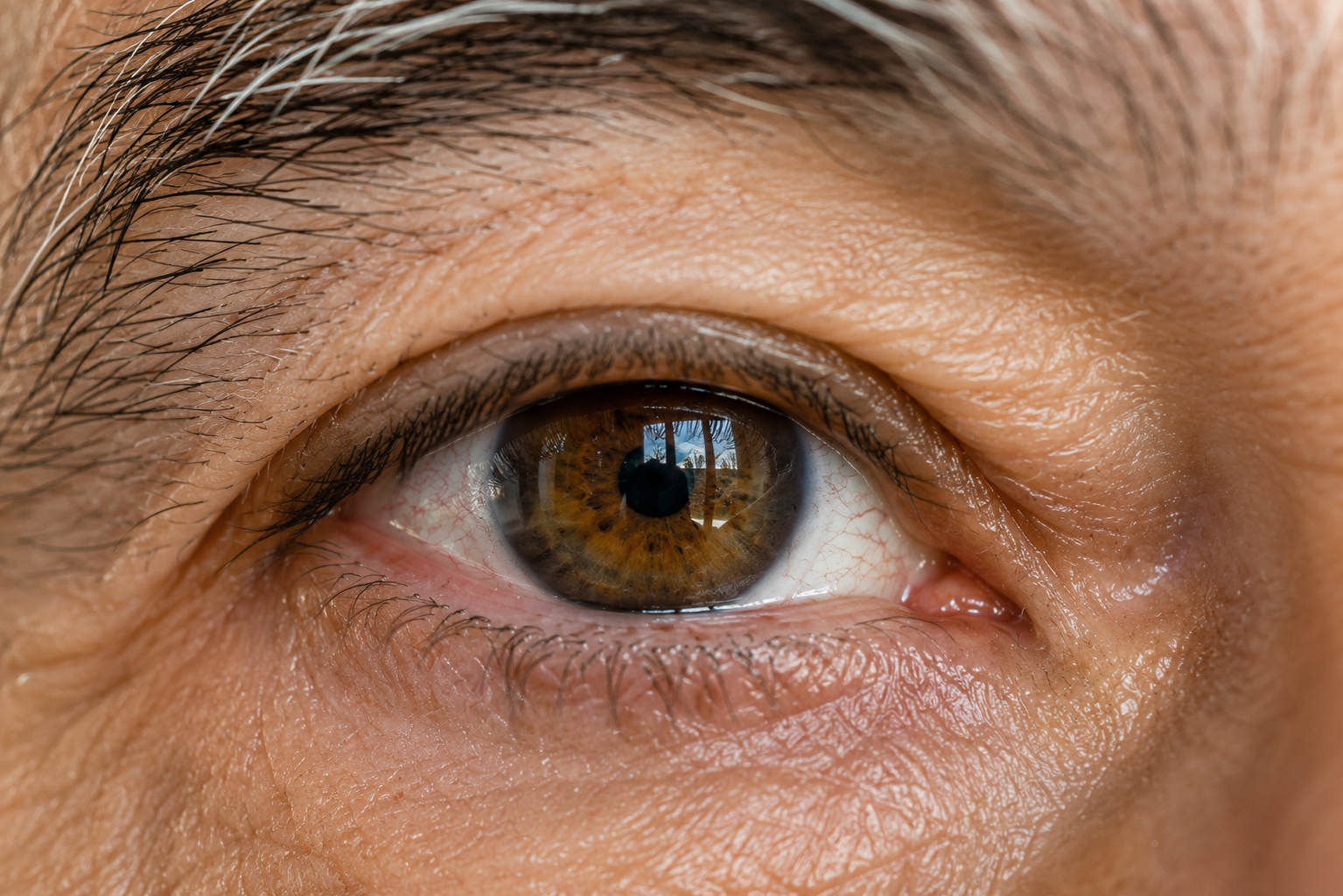
Close-up view of a human eye during ophthalmic examination

Why Patients Focus on the Wrong Eye

This is more common than most people realize. The human brain integrates visual information from both eyes so seamlessly that it can be genuinely difficult to determine which eye is causing a problem. Cover one eye, and the answer might surprise you. Many patients who come to my office convinced that their right eye is the issue discover, sometimes with real shock, that the left eye was responsible all along.

There is a reason for this beyond simple anatomy. Psychologists call it anchoring bias. Once a diagnosis exists, the mind attaches new information to that known explanation. This patient knew he had a vein occlusion in the right eye. So when his vision changed, his brain built the most logical story it could: the right eye must be getting worse.

It is a very human response. We all reach for familiar explanations when something feels uncertain. It reduces anxiety. It gives us the sense that we understand what is happening, even when the full picture is more complex than we realize.

Why We Examine Both Eyes

Patients sometimes ask why we need to dilate and examine both eyes when only one seems to be causing trouble. It is a fair question, and the answer is simple: disease does not follow the stories we tell ourselves about it.

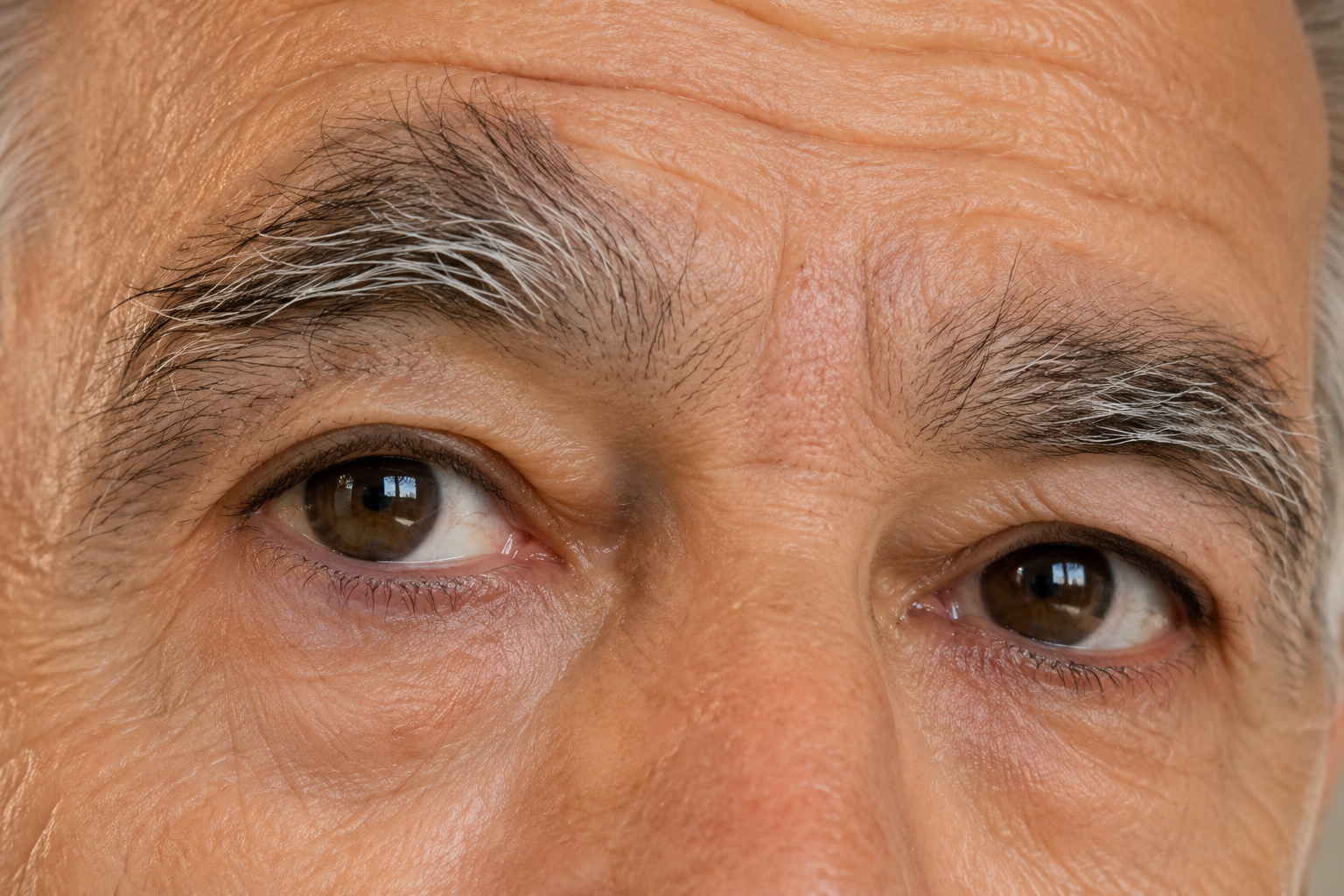
Comparison view of both eyes during a comprehensive ophthalmic exam

The body does not organize its problems according to our expectations. A condition can develop silently in one eye while all of our attention, both the patient's and the physician's, is directed at the other. If we only looked where we already knew to look, we would miss the very thing that matters most.

This is what diagnostic humility looks like in practice. It means accepting that the next finding may not come from the direction you expect.

It means resisting the pull of pattern recognition long enough to see what is actually there, rather than what you assume should be there.

The Philosophy of Seeing

There is something deeper here that goes beyond clinical medicine. We tend to think of vision as a straightforward act. Light enters the eye, the brain processes it, and we see the world as it is. But that is not quite right.

Vision is interpretive. What we see is filtered through the brain's assumptions, its expectations, its accumulated experience. We do not simply observe reality. We construct it, moment by moment, from incomplete information and prior belief.

In this case, both the patient and the structure of the follow-up visit could easily have centered entirely on the right eye. The known problem. The expected complication. And if we had stopped there, the quiet emergence of wet macular degeneration in the left eye might have gone undetected for weeks longer.

Attention illuminates. But it also narrows. What you focus on reveals certain truths while potentially hiding others. Medicine, at its best, requires the discipline to look beyond the obvious, beyond the expected, and sometimes beyond the very place where everyone assumes the answer must be.

Observation as Protection

This is why comprehensive examination is not a formality. It is not a billing exercise or a box to check. Every time we dilate both eyes, every time we scan both retinas, we are acknowledging a fundamental truth about the human body: it does not owe us predictability.

The next problem may come from the eye you least suspect. And the only reliable defense against that uncertainty is the willingness to look everywhere, every time.

A thought from the clinic

In ophthalmology, careful observation is not simply routine. It is protection. The eye that seems fine may be the one that needs you most. And the discipline to look, truly look, at what is in front of you rather than what you expect to find is one of the most important things a physician can practice.

Related Reading