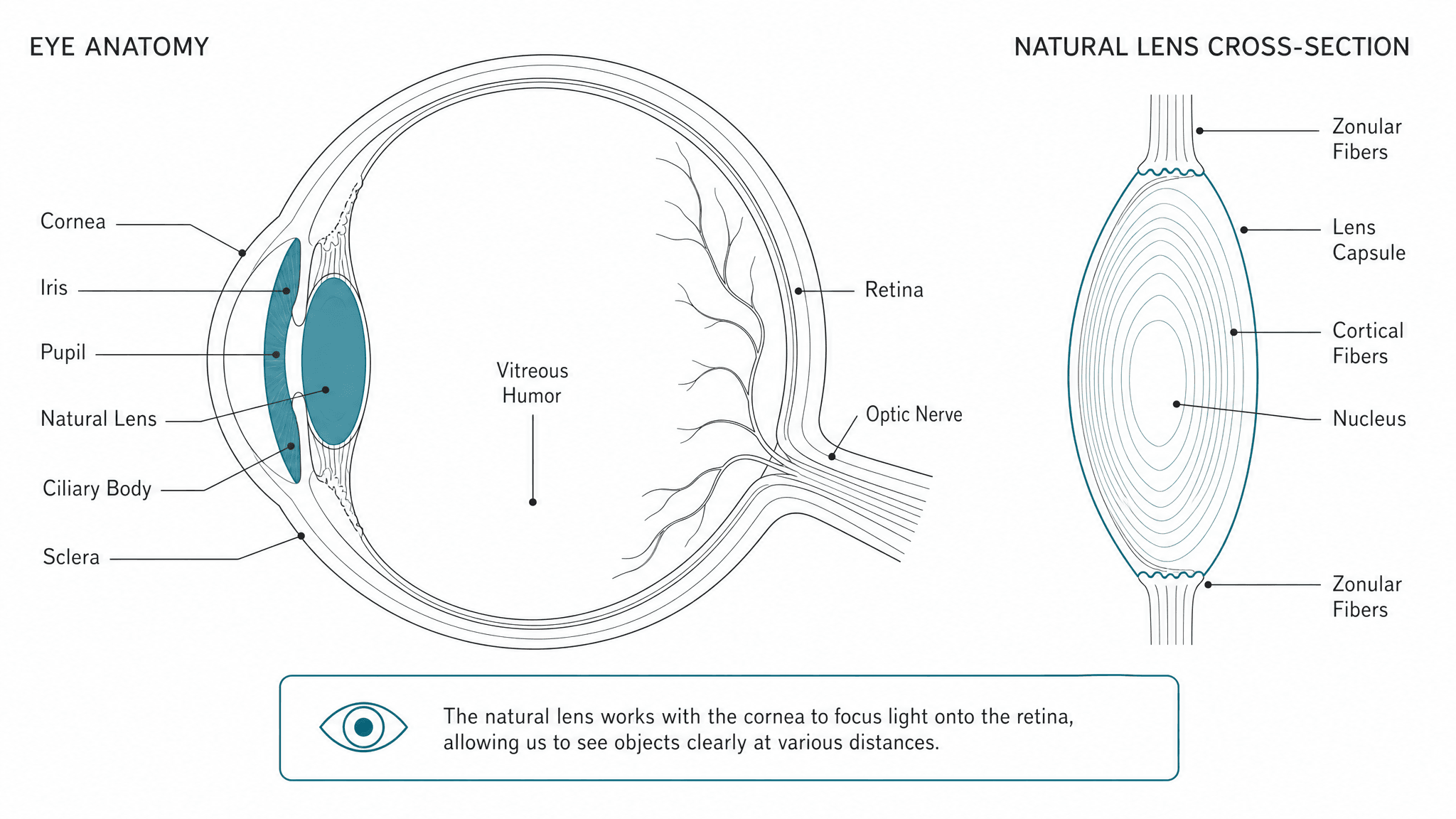
A cataract is a clouding of the natural lens inside your eye. That lens sits behind your iris and pupil, and it’s normally clear. Over time, proteins in the lens break down and clump together, making it cloudy. Your vision gets hazy. Colors look washed out. Night driving becomes a nightmare because of glare and halos.
Almost everyone develops cataracts if they live long enough. It’s the most common cause of vision loss in the world, and the good news is that it’s completely fixable. Cataract surgery is one of the most frequently performed and successful surgical procedures in all of medicine.
What Are Cataracts? Dr. Tokuhara Explains
There’s no magic number or test result that says “it’s time.” Cataract surgery is an elective procedure, and the timing depends on you. The real question is: are cataracts getting in the way of the things you want to do?
Can you drive safely at night? Can you read without straining? Are you having trouble recognizing faces or seeing clearly in bright light? If your cataracts are affecting your quality of life, it’s worth having a conversation. But there’s no rush, and nobody should be pressuring you into it.
When we meet, I’ll tell you honestly where your cataracts are and whether surgery makes sense now or whether waiting is perfectly fine. If you’re not ready, that’s okay. My job is to give you the information you need to make a good decision on your timeline.
5 Questions to Ask Before Cataract Surgery
“”

We start with a thorough eye exam and measurements. I use advanced imaging to map your eye and plan your surgery. We’ll talk about lens options, and I’ll explain what each one actually does. No sales pitch. Just facts and my honest recommendation based on your eyes.
You’ll get a full rundown of what to expect on surgery day so there are no surprises. Most people are nervous before their first eye surgery. That’s completely normal, and I’d rather you ask me twenty questions than go in feeling anxious.
The procedure takes about 10 to 15 minutes per eye. You’re awake, but your eye is numbed so you won’t feel pain. I use laser assisted techniques for a level of precision that wasn’t possible even a few years ago. The cloudy lens gets broken up and removed, and I place a new artificial lens implant in its place.
Most patients say it was much easier than they expected. The anticipation is almost always worse than the actual experience.
Most people notice improved vision within a day or two. You’ll use eye drops for a few weeks and come back for follow up visits so I can make sure everything is healing well. There are some temporary restrictions, like avoiding heavy lifting and keeping water out of your eyes, but most patients are back to their normal routine pretty quickly.

What Happens in Cataract Pre-Op?
What Happens After Surgery in the Recovery Room
“”
Thorough evaluation, honest conversation about your options
Advanced imaging to map your eye and select the right lens
10-15 minutes, numbing drops, no pain, no stitches
Most patients see clearly within a day or two
Brighter colors, sharper details, life without cloudy vision
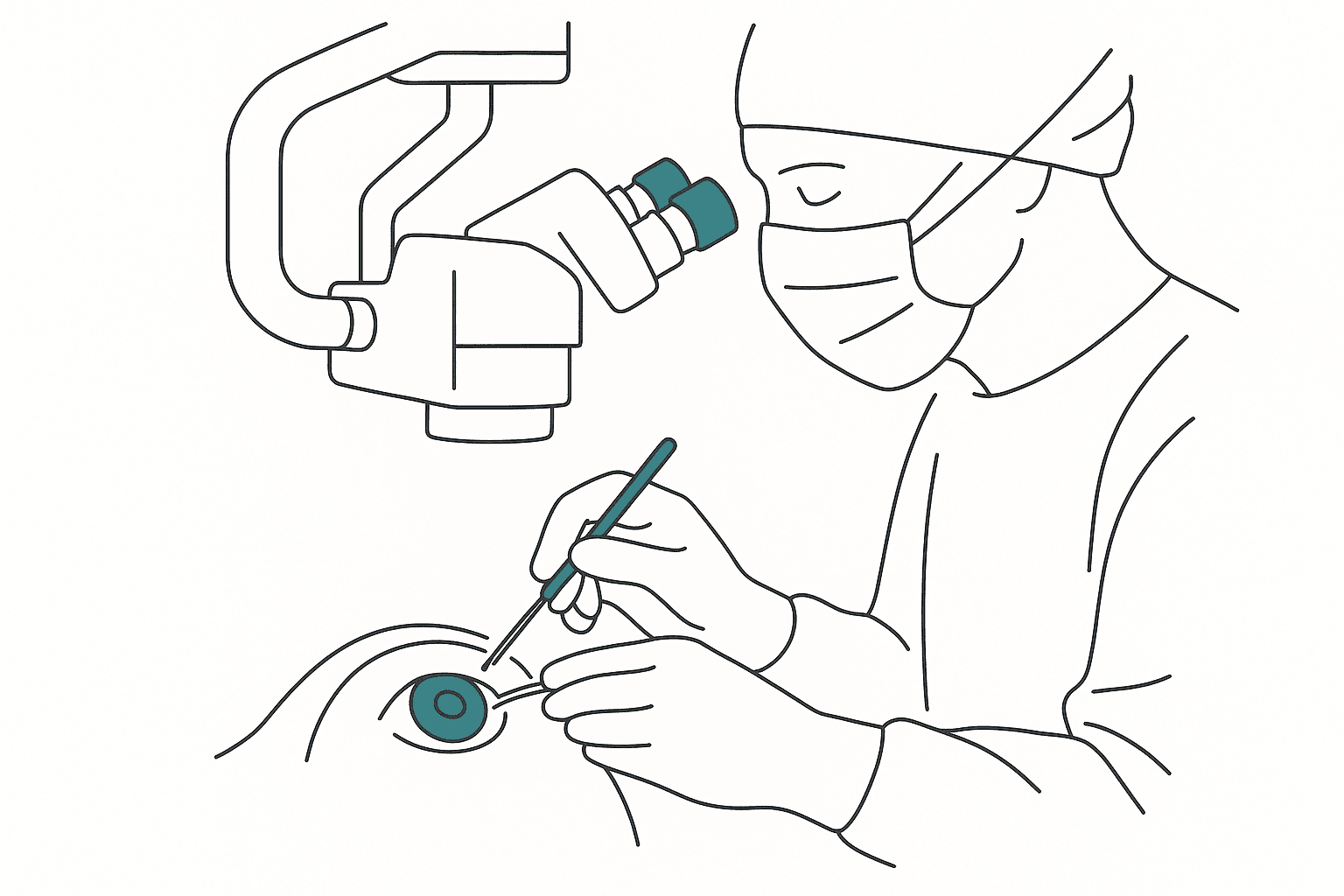
Traditionally, cataract surgery is done one eye at a time, weeks apart. That means two separate surgical days, two rounds of recovery, and weeks of imbalanced vision between your eyes. For the right patients, there’s a better way.
CLEAR in a Day is my protocol for same day bilateral cataract surgery. Both eyes are treated in a single session with independent sterile setups for each eye. The instruments are changed, the drapes are changed, everything is treated as if it’s a completely separate surgery. Because it is.
The advantages are real: one day of arranging rides and taking off work, faster visual recovery since both eyes improve together, and less overall disruption to your life. But I’m not going to tell you every patient is a candidate. Some eyes need the sequential approach, and I’ll tell you straight if that’s your situation.
How We Do Cataract Surgery
“”

The standard lens implant. Sets your focus at one distance, usually far away. Most patients still need reading glasses afterward. It’s reliable, proven, and covered by insurance. For a lot of patients, this is the right choice.
Designed for patients with astigmatism. A toric lens reduces the irregular curvature of your cornea at the same time as cataract removal. Without it, astigmatism will still blur your vision even after surgery. I use precise alignment techniques to get the best result.
Lenses like PanOptix and PanOptix Pro, and Vivity give you a range of vision. Distance, intermediate, and sometimes near. The goal is reducing or eliminating dependence on glasses. These lenses aren’t for everyone, and I’ll explain why some eyes do better with them than others.
Toric Lens Implants for Astigmatism
PanOptix vs PanOptix Pro: Real Patient Experience
Vivity Lens: Behind the Scenes
“”
Not every cataract surgery goes perfectly. And not every eye is straightforward. Some patients come to me after a bad experience with another surgeon. A dislocated lens implant. Iris damage. A posterior capsule rupture that left them with blurry vision and no answers. These are the cases I specialize in.
I also see patients whose anatomy makes standard surgery difficult. Previous eye trauma, weak lens support structures, small pupils, dense cataracts. The cases that require a plan B, C, and D before you even start.
If another doctor told you your case is too complicated or there’s nothing more they can do, it’s worth getting a second opinion. That’s not a knock on your doctor. Some cases genuinely need a surgeon who handles complex work every day.
Posterior Capsule Rupture Explained
Iris Damage Repair After Cataract Surgery
Fixing a Dislocated Lens Implant: Yamane Technique
Desert Vision Center is physician-owned and fully independent. There is no corporate parent company, no private equity investors, and no one influencing which lenses I recommend or how I practice. Every surgical plan is built around your eyes, your lifestyle, and your goals.
I trained under Dr. Howard Gimbel during my residency at Loma Linda University. Gimbel is one of the most respected names in cataract surgery worldwide. That training, combined with a retina fellowship and years of specializing in complex and revision cases, shapes how I approach every patient. Even routine cataracts benefit from the kind of planning and judgment that comes from handling the hardest cases regularly.
Named a Top Doctor by Palm Springs Life every year since 2019. Recognized by NBC as the best cataract surgeon in the Coachella Valley. First in the valley to perform Yamane secondary lens fixation, Vivity lens implantation, and PanOptix Pro trifocal implantation.
The actual cataract surgery procedure typically takes about 10 to 15 minutes per eye. Including pre-op preparation and recovery observation, plan for about 2 to 3 hours at the surgical center.
No. Cataract surgery uses numbing eye drops and mild IV sedation. Most patients feel pressure but no pain during the procedure. Many patients say the experience was much easier than they expected.
Most patients notice improved vision within 24-48 hours. Vision continues to sharpen over the first week as the eye heals. Full visual stability typically occurs within 4-6 weeks.
You cannot drive yourself home from surgery. Most patients can resume driving within a few days once their vision meets the legal requirement, which Dr. Tokuhara confirms at the post-operative visit.
Yes, standard cataract surgery is covered by Medicare and most insurance plans when medically necessary. Premium lens implants and laser-assisted technology may involve additional out-of-pocket costs, which are discussed transparently during consultation.
You don’t need a referral to schedule a consultation. If you’re thinking about cataract surgery, or you’ve had a bad experience and want a second opinion, let’s talk.