What can go wrong, how I handle it, and why this page exists at all.
Most surgeon websites do not have a page like this. I think that is a mistake.
Cataract surgery is one of the safest, most successful procedures in all of medicine. The success rate exceeds 99%. But "safe" does not mean "risk-free," and pretending complications do not exist does not serve patients. It just means they are unprepared if something does happen.
I would rather you understand the risks honestly than be surprised by them later. And I would rather you know that if a complication occurs, your surgeon has both the training and the temperament to handle it.
Click any topic to learn more:

I regularly see patients for second-opinion consultations after complications from cataract surgery performed elsewhere. This is a significant part of my practice. With fellowship training in medical retina, I am uniquely positioned to manage both the anterior segment complications of cataract surgery and the posterior segment consequences that can follow.
Here is what I have learned from those consultations: the complication itself is rarely what causes the most damage. It is how the complication is managed, and how the patient is treated afterward, that determines the outcome.
Incidence: 1-3% of cataract surgeries. Harvard Massachusetts Eye and Ear reported 1.7% (2018). Risk factors: previous retina surgery, intravitreal injections, trauma, dense cataracts, pseudoexfoliation. Outcome with proper management: majority achieve good visual outcomes.
During cataract surgery, the natural lens sits inside a thin membrane called the capsule. We open the front to access the cataract and leave the back intact. It is just two to four micrometers thin, and it provides structural support for the new lens implant.
When the posterior capsule breaks during surgery, three things can go wrong:
Usually, no. Techniques like reverse optic capture (Gimbel) and the Kanabrava four-flange technique can allow toric or multifocal placement in select cases, but long-term stability data is still emerging. Each case requires individual assessment.
My detailed explanation with anatomy diagrams and management strategies.
Cause: Iris prolapse through incision sites during surgery due to poor fluidics or surgical control. Symptoms: Severe glare, light sensitivity, cosmetic changes to the pupil. Treatment: Microsurgical iris repair with suturing techniques.

A 73-year-old woman came to me after two years of debilitating glare following cataract surgery at another practice. Her vision measured 20/30 and 20/40, numbers that look reasonable on paper. But her reality:
Could not tolerate bright lights. Even the darkest sunglasses were not enough.
Kept the windows of her house closed just to block the sun.
Could not drive. Relied entirely on her husband for transportation.
Went to the grocery store only in the early morning or late evening.
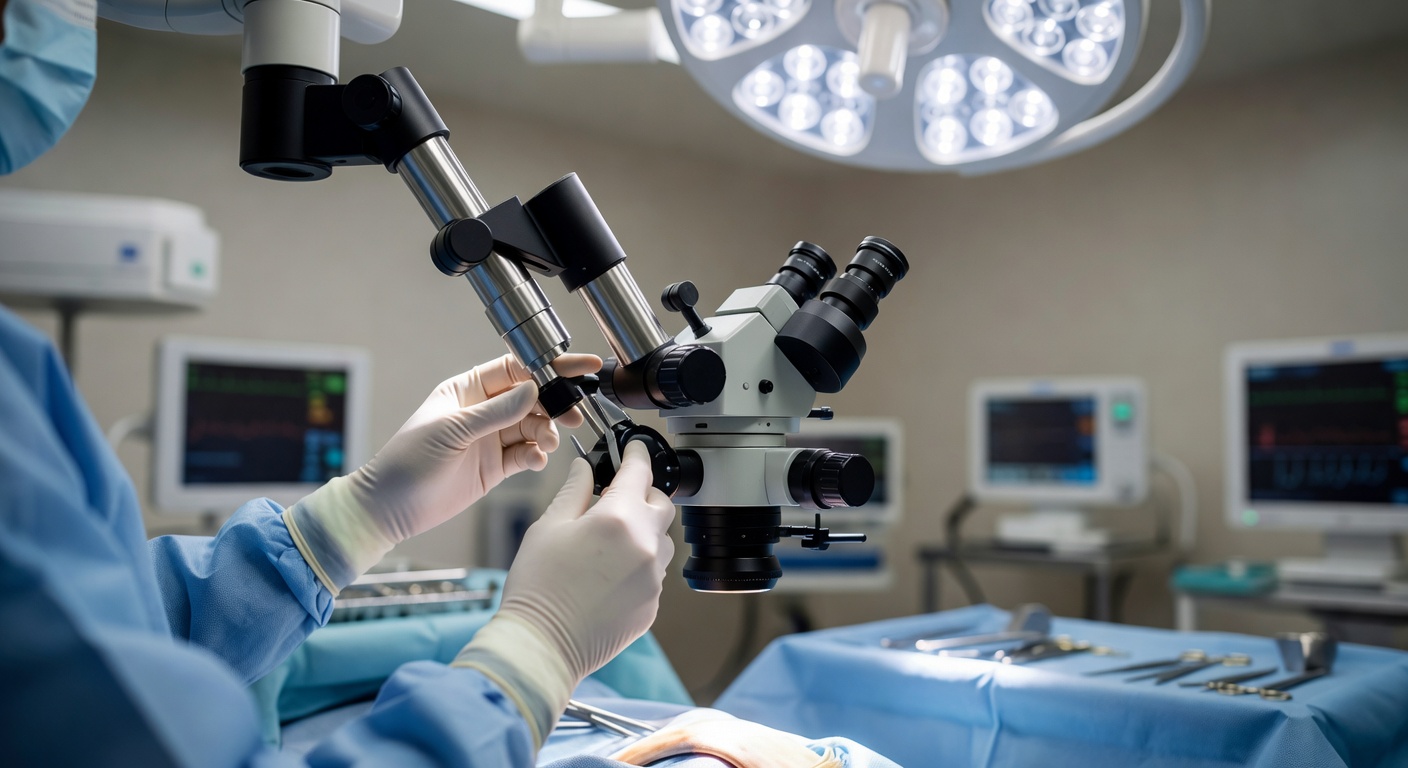
Under the microscope, I found iris damage at the incision sites in both eyes. Light was passing directly through the damaged tissue, a finding called transillumination.
Using microsurgical suturing techniques, I reconnected the damaged iris and rebuilt the pupil sphincter muscle. Think of it like carefully tying laces to close gaps in delicate fabric.
First day after surgery: 20/20 vision. Glare resolved. She could drive again.
Before and after photographs and full explanation of the repair technique.
When: Can occur months or years after surgery. Causes: Trauma, pseudoexfoliation, weakened zonules, prior retina surgery. Symptoms: Shifting vision, "the world shakes" with eye movement. Fix: Yamane sutureless intrascleral fixation.
We always talk about lens implants lasting the rest of your life. In most cases, they do. But sometimes trauma, weakened support structures, or other factors cause the lens to shift or dislocate years after the original surgery.
I recently saw a patient whose lens had dislocated 15 years after her original cataract surgery. Every time she looked up or down, the world seemed to shake. Under the microscope, you could literally see the lens implant moving inside the eye with each blink.
Using the Yamane technique, I was able to reposition and anchor her lens without sutures, resulting in a perfectly centered, stable implant.
Incidence: Clinical CME occurs in approximately 1-2% of uncomplicated cataract surgeries. Subclinical CME (detectable only on OCT) may be higher. Timing: Usually appears 4-6 weeks after surgery. Risk factors: Diabetes, uveitis, epiretinal membrane, complicated surgery. Treatment: Anti-inflammatory drops, sometimes injections.
Cystoid macular edema is swelling at the center of the retina (the macula) that can develop after cataract surgery. It occurs when inflammation causes fluid to accumulate in tiny cyst-like spaces in the retinal tissue.
Patients notice blurred or distorted central vision, usually developing a few weeks after surgery, after initially seeing well. The good news: most cases respond to treatment with anti-inflammatory eye drops (NSAIDs and/or steroids). Persistent cases may require a steroid injection or other targeted therapy.
Diabetic patients and those who had complicated surgery are at higher risk. I monitor all my patients closely in the post-operative period and start treatment early when signs of CME appear on OCT imaging.
Incidence: Approximately 0.03-0.1% (roughly 1 in 1,000 to 1 in 3,000 surgeries). Timing: Usually within the first week after surgery. Severity: This is the most feared cataract surgery complication. Prompt treatment is critical. Prevention: Povidone-iodine antisepsis, intracameral antibiotics, sterile technique.
Endophthalmitis is an infection inside the eye. It is rare, but it is the complication that every cataract surgeon takes the most seriously because it can threaten vision permanently if not treated immediately.
Warning signs include increasing pain, worsening redness, and decreasing vision in the days following surgery. If you experience any of these, contact your surgeon immediately. Do not wait until your next scheduled appointment.
Prevention is everything. At Desert Vision Center, we follow evidence-based protocols including povidone-iodine antisepsis, intracameral antibiotic injection at the end of surgery, and rigorous sterile technique throughout every procedure.
Incidence: Approximately 0.5-1% within the first year after cataract surgery. Higher in highly myopic eyes. Warning signs: Sudden flashes of light, shower of new floaters, shadow or curtain in peripheral vision. Treatment: Surgical repair by a vitreoretinal surgeon. Key: Prompt recognition dramatically improves outcomes.
Cataract surgery slightly increases the lifetime risk of retinal detachment. The risk is highest in the first year after surgery and is more elevated in patients with high myopia (severe nearsightedness), a history of retinal problems, or who experienced complications during surgery.
My fellowship training in medical retina means I understand this risk from both sides: as a cataract surgeon who takes precautions to minimize it, and as a retina-trained physician who knows exactly what to look for during follow-up. I personally monitor my patients for retinal changes and can coordinate immediate referral for surgical repair if needed.
Incidence: Up to 20-30% of patients within 5 years. This is not a complication. It is a normal part of how some eyes heal after surgery. Treatment: YAG laser capsulotomy, a painless 5-minute in-office procedure. Outcome: One-time treatment, capsule does not cloud again.
Strictly speaking, PCO is not a surgical complication. It is a natural healing response where cells on the capsule multiply and create a hazy film behind the lens implant. It feels like the cataract is returning, but the lens itself is fine.
I include it on this page because it is the most common reason patients contact me with concerns after surgery. The treatment, YAG laser capsulotomy, is one of the most satisfying procedures in ophthalmology: five minutes, no pain, clear vision restored.

A significant part of my practice involves seeing patients who experienced complications from cataract surgery performed elsewhere. If you are in that situation, I want you to know a few things:
Most cataract surgeries are uneventful. But know these warning signs:
These symptoms do not necessarily mean something is wrong. But they warrant prompt evaluation. The earlier a complication is identified, the better the outcome.
I have spent years thinking about why some surgeons avoid talking about complications. I think it comes from a good place, a desire to reassure, to not frighten patients away from a procedure that will genuinely improve their lives. But reassurance built on incomplete information is fragile. I would rather a patient walk into surgery with clear eyes, literally and figuratively, than discover after the fact that they were never told what was possible. Trust is not built by hiding risk. It is built by facing it together.