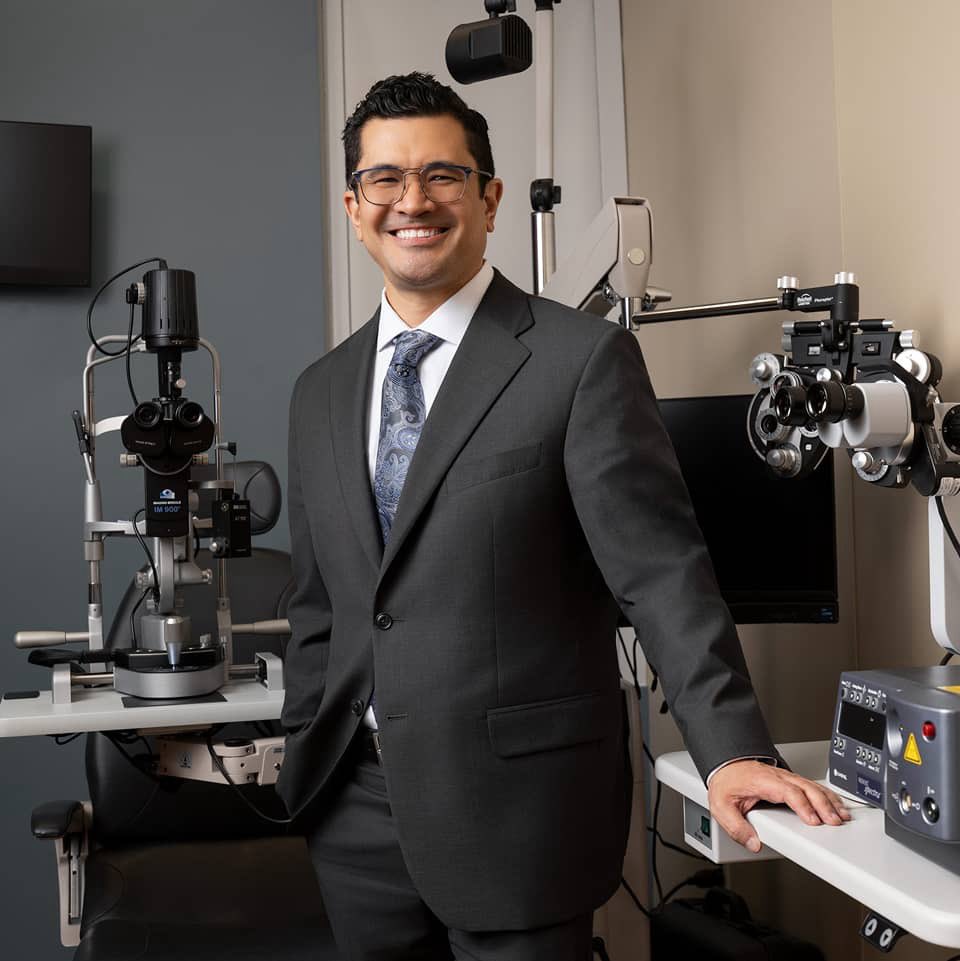
If someone in my family needed cataract surgery, I would not tell them to search for "best cataract surgeon near me" and pick the top result. I would sit them down and explain what actually matters. Not marketing. Not office decor. Not even online reviews, though those can be a useful signal. I would talk about five things.

These are the same five things I would want any patient to consider. Not because I am trying to promote myself, but because I have seen what happens when patients choose based on convenience alone. Sometimes it works out fine. Sometimes they end up in my office afterward, asking me to fix something that did not need to go wrong.
Cataract surgery is the most commonly performed surgery in the world. Over four million procedures happen in the United States every year. The success rate is extraordinarily high. But "common" does not mean "simple." And the difference between a good outcome and a great one often comes down to the surgeon.
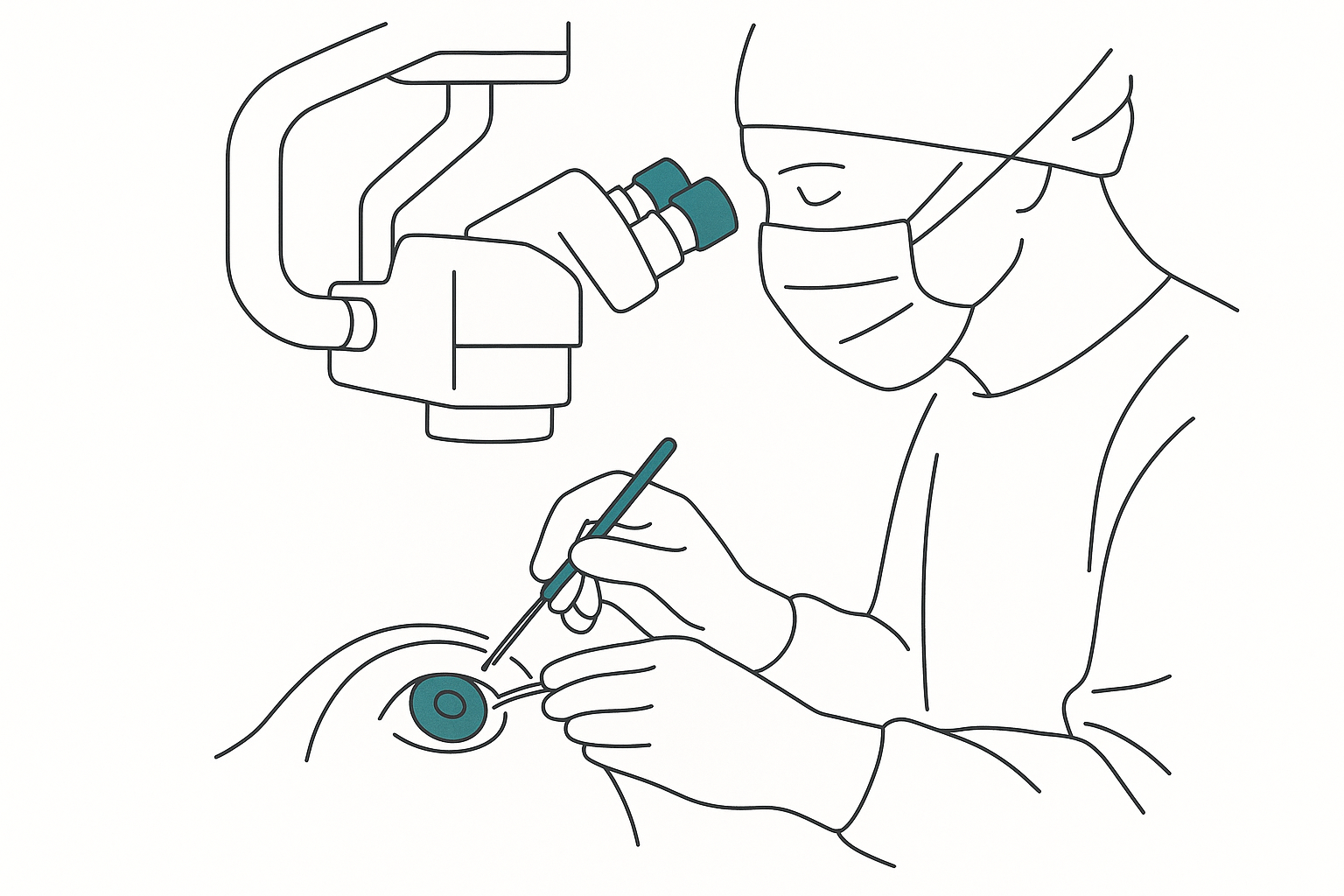
Every ophthalmologist learns cataract surgery during residency. But there is a significant difference between a surgeon who completed residency and one who then spent an additional one to two years in a fellowship focused on anterior segment and cataract surgery.
Fellowship training means thousands of additional surgical cases under the direct supervision of the most experienced surgeons in the field. It means encountering complications early, in a controlled environment, with a mentor standing beside you. It means developing the judgment to know when a case is straightforward and when it is not.
I completed my residency under Dr. Howard Gimbel, one of the pioneers of modern cataract surgery. That training shaped not just my technique, but my philosophy: stay calm, stay prepared, and never assume a case will be routine. I also completed a fellowship in vitreoretinal surgery, which gives me the ability to manage complications that extend beyond the anterior segment of the eye.
Ask your surgeon: Where did you train? Did you complete a fellowship? Not every great surgeon did a fellowship, but the question itself tells you something about how seriously they pursued mastery.
There is no substitute for experience. A surgeon who has performed 500 cataract surgeries has seen a certain range of eyes. A surgeon who has performed 20,000 has seen nearly everything.
Volume matters because cataract surgery is not a single procedure applied identically to every patient. Every eye is different. Dense brunescent cataracts behave differently than soft nuclear cataracts. Eyes with pseudoexfoliation present unique challenges. Patients with small pupils, previous refractive surgery, or weak zonules require real-time adjustments that cannot be scripted.
High volume builds what surgeons sometimes call "pattern recognition," the ability to sense within the first few seconds of a procedure whether this eye will behave normally or demand something different. That instinct is not taught in a textbook. It is earned, one case at a time, over years.
I have performed over 20,000 cataract and lens procedures. That number is not a marketing point. It is context. It means I have likely encountered a version of whatever your eye presents.
This is the one most patients never think to ask about. And it might be the most important.
Every surgeon encounters complications. Cataract surgery has a very low complication rate, but "low" is not "zero." The capsule can tear. The lens can drop. The cornea can swell. These events are uncommon, but they happen, and when they do, the question is not whether your surgeon has seen it before. The question is whether your surgeon can manage it in real time, calmly and competently, without needing to stop the case and refer you elsewhere.
"Every surgeon encounters complications. The question is whether yours can manage them."
Some surgeons can only perform straightforward cataract surgery. When something unexpected happens, they close the eye and send the patient to a specialist. That is not necessarily wrong, but it means the patient undergoes a second procedure, often at a different facility, with a surgeon they have never met.
A surgeon trained in complex anterior segment surgery can handle most complications in real time. If a lens drops into the vitreous cavity, a surgeon with retinal training can retrieve it. If a lens needs to be exchanged or suturelessly fixated, a surgeon who performs the Yamane technique can do so without additional referrals. These capabilities matter, not because complications are common, but because if one happens to you, you want a surgeon who can solve it.
I regularly receive referrals from other surgeons for cases that went sideways: dropped lenses, dislocated implants, post-surgical complications that need revision. Handling these cases is part of my practice. It is also part of why I approach every routine case with the same level of preparation.
This is the part of the conversation that makes some people uncomfortable. But it matters, and patients deserve to understand it.
Over the past decade, private equity firms and corporate management companies have been acquiring ophthalmology practices at an accelerating rate. The financial model is straightforward: buy practices, increase volume, cut costs, and sell at a profit. The doctors who work in these systems are often skilled. But they operate within structures that prioritize throughput.
In a corporate-backed practice, your surgeon may have limited say in how long your consultation lasts, which lens options are presented to you, or how much time is spent on follow-up care. The business model rewards speed and standardization. Personalization takes longer and costs more.
An independent surgeon answers to patients, not investors. That distinction shapes every recommendation, every conversation, and every surgical decision.
I am an independent physician. Desert Vision Center is not owned by a corporation, a hospital system, or a private equity group. That independence means I spend as long as each patient needs during the consultation. It means I recommend the lens that fits their eyes and their life, not the one that generates the highest margin. It means I make decisions based on clinical judgment alone.
Ask your surgeon: Are you part of a larger management group? Who makes the business decisions in your practice? The answer will tell you a lot about the kind of care you can expect.
The consultation is the most underrated part of cataract surgery. It is where expectations are set, risks are discussed, and decisions are made. A five-minute consultation cannot do this well. A consultant who tells you everything will be perfect is not being honest. And a surgeon who cannot clearly explain what they plan to do, and why, is someone you should think twice about trusting with your vision.
Honest communication means telling a patient when surgery is not yet necessary, even if it means turning away revenue. It means explaining that a toric lens reduces astigmatism rather than promising it will eliminate glasses entirely. It means being direct about the tradeoffs of every lens option and helping the patient make an informed decision rather than a pressured one.
It also means honesty about limitations. No surgery is risk-free. No lens is perfect for everyone. No surgeon bats a thousand. The best surgeons I have known over my career are the ones who say, "Here is what I can do, here is what I cannot promise, and here is what we will do if things do not go as planned."
"If your surgeon is not willing to tell you when surgery is not the right call, ask yourself why."
During my consultations, I spend as much time listening as I do explaining. A working parent who needs reliable near and distance vision for their job has different needs than a retired grandparent who reads for hours every day. A patient with dry eye disease needs a different lens conversation than one with a pristine ocular surface. These distinctions matter, and they can only surface when the surgeon takes the time to listen.
Here is a practical summary. When you are evaluating a cataract surgeon, consider asking these questions:
A good surgeon will not be offended by any of these. In fact, they will welcome them. These are the questions of a patient who is taking their vision seriously.
Choosing a cataract surgeon is not like choosing a restaurant. You do not get to try again if the experience is poor. Your eyes deserve a surgeon who was rigorously trained, has seen thousands of cases, can manage the unexpected, works independently of corporate influence, and communicates with honesty. That is not an unreasonable standard. It is the minimum.
I did not write this to tell you to choose me. I wrote it because too many patients make this decision based on who is closest to their house or who has the nicest website. Those things do not matter when you are on the operating table. What matters is the thousands of hours your surgeon spent preparing for the moment something does not go as expected. What matters is whether your surgeon will tell you the truth, even when the truth is "not yet" or "that lens is not right for you." If you are reading this and asking these questions, you are already doing better than most. Trust the process. Trust your instincts. And trust the surgeon who earns it.
If you are considering cataract surgery and want a consultation with a surgeon who will take the time to listen, I would welcome the conversation.
Schedule a Consultation