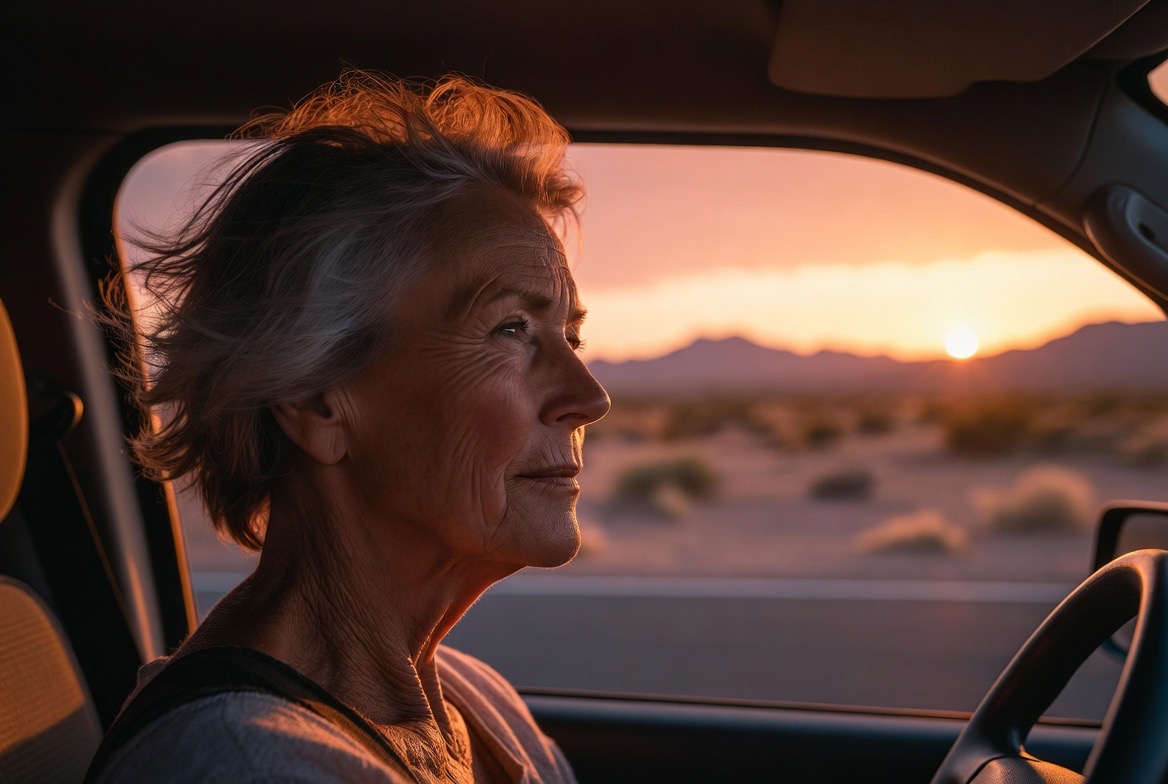
Big Bear is a community that embraces the tradeoffs of mountain living. The air is clean, the pace is slower, the forest is your backyard. But when it comes to specialized medical care, the mountain creates real barriers. There is no ophthalmologist in Big Bear Lake. No cataract surgeon in Lake Arrowhead, Running Springs, or anywhere in the San Bernardino Mountains.
When cataracts begin to affect your vision, the default path sends you down the mountain to San Bernardino or Loma Linda. That means navigating CA-18 or CA-330, the steep, winding roads that every Big Bear resident knows well. In summer, it is manageable. In winter, with ice and snow, it is the drive most people dread. And you will need to make that drive multiple times: once for consultation, once for surgery, again for follow-up. Both eyes means doing it all twice.
There is another option. One that most Big Bear residents do not know about.
Instead of driving down the mountain to San Bernardino, you can drive east through the high desert to Rancho Mirage. The route follows CA-18 East to CA-247 (Old Woman Springs Road) down to Lucerne Valley, then continues on CA-62 through Yucca Valley and Joshua Tree to I-10 West. Exit at Bob Hope Drive, and Desert Vision Center is right there.
This route is flat. No switchbacks. No steep grades. No ice-covered mountain passes. The descent from Big Bear to Lucerne Valley on CA-247 is gradual and straightforward. Once you are in the high desert, it is open road the rest of the way.
Total drive time: approximately 1.5 to 2 hours. That is comparable to the mountain descent into San Bernardino, but without the white-knuckle driving. And what is waiting at the other end is fundamentally different from a large hospital system.
I am Dr. Keith Tokuhara. I built Desert Vision Center as a physician-owned, independent practice because I believe cataract surgery should be personal, unhurried, and precise. Here is what that means for Big Bear patients:
Choosing a cataract surgeon is one of the most important medical decisions you will make. Here is my background:
Every treatment plan is individualized. I evaluate your eyes, listen to your priorities, and build a plan from there. The procedure itself typically takes 10 to 15 minutes per eye.
Big Bear residents are practical. You chose the mountain because the quality of life is worth the tradeoffs. You maintain your own roads, drive in conditions that would terrify a city driver, and plan around weather because that is what mountain living requires.
Cataract surgery is not something you do every year. It is a one-time decision that affects your vision for the rest of your life. Whether you spend your time on the trails, behind a camera, at the lake, reading on the porch, or watching the stars over the San Bernardino National Forest, clear vision makes all of it better.
The drive to Desert Vision Center through the high desert is flat, easy, and about the same time as the mountain descent to San Bernardino. The difference is what is waiting when you arrive: a surgeon who knows your name, takes the time to get your plan right, and performs your surgery with the precision of 20,000+ cases of experience.
No ophthalmologist on the mountain. A flat, easy drive east to a physician-owned practice where your surgeon performs every procedure personally. Big Bear residents deserve that option.
Desert Vision Center is located at 35900 Bob Hope Drive, Suite 175, Rancho Mirage, CA 92270. From Big Bear Lake, the drive is approximately 1.5 to 2 hours.
Recommended route (flat, no mountain pass): Take CA-18 East from Big Bear Lake toward Baldwin Lake and Big Bear City. Continue on CA-247 (Old Woman Springs Road) north down to Lucerne Valley. From Lucerne Valley, take CA-247 south to CA-62 East through Yucca Valley and Joshua Tree. Continue on CA-62 to I-10 West. Exit at Bob Hope Drive in Rancho Mirage and head south. The office is on your right, near Eisenhower Health.
Why this route: This avoids the steep, winding descent on CA-18 West or CA-330 to San Bernardino. The grade from Big Bear to Lucerne Valley via CA-247 is gradual. Once in the high desert, the road is flat and open. This is particularly important in winter or during post-surgery recovery when winding mountain roads are best avoided.
Ample parking is available directly in front of the building.
No cataract surgeon on the mountain? Take the flat route east to Desert Vision Center in Rancho Mirage. Fellowship-trained, 20,000+ surgeries, and flexible scheduling for out-of-area patients. No referral required.