If your vision has become cloudy again after cataract surgery, you are not imagining it. Here is what is happening and how we fix it.
One of the most common reasons patients come back to me months or years after cataract surgery is this: their vision was great for a while, and now it feels like the cataract has returned.
It has not. What has happened is something called posterior capsule opacification, sometimes called a "secondary cataract." It is incredibly common, completely treatable, and the fix takes less than five minutes.
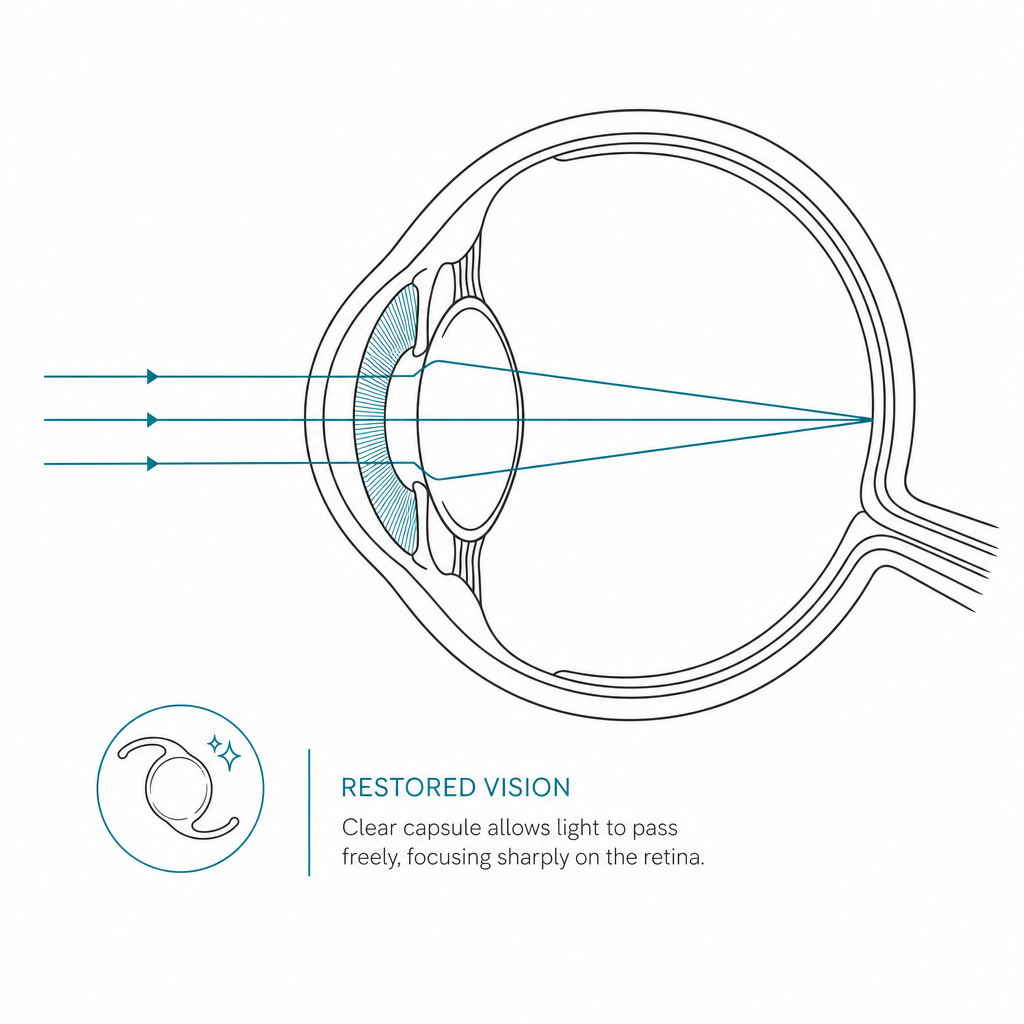
During cataract surgery, I remove the cloudy natural lens from inside your eye and replace it with a clear artificial lens implant. That implant sits inside a thin, transparent membrane called the capsule, which we intentionally leave in place to support the new lens.
Over time, cells on the back surface of that capsule can multiply and create a hazy film. Think of it like condensation forming on the inside of a window. The lens implant itself is perfectly fine. The cloudiness is on the membrane behind it.
This can happen weeks, months, or even years after surgery. It does not mean anything went wrong. It is simply how some eyes heal.
Patients describe it in ways that sound a lot like their original cataract symptoms:
The gradual return of blur is the hallmark of PCO. It can be subtle at first, then progressively noticeable.
The cloudy capsule scatters light, creating the same visual disturbances that cataracts cause.
The membrane filters and diffuses light, reducing the vibrancy that you noticed when your vision was at its clearest.
If any of this sounds familiar, the good news is straightforward: this is one of the most successfully treated conditions in all of ophthalmology.

YAG laser capsulotomy is done right in the office. No operating room. No anesthesia. No needles. Here is what to expect:
That is it. Most patients notice clearer vision within hours. Some notice it immediately.
Recovery is minimal. You will use anti-inflammatory eye drops for a short period, and we will check your eye pressure and vision at a follow-up visit within one to two weeks.
There are no activity restrictions. You can drive, read, and return to normal life the same day.
And here is the best part: once the capsule is opened, it does not cloud over again. This is a one-time treatment.
I made a video walking through the entire YAG laser capsulotomy process, including the equipment, the technique, and what patients see and feel. If you are scheduled for this procedure or considering it, this will answer most of your questions.
Patients sometimes feel embarrassed when they come in thinking their cataract has returned. They worry they waited too long or that something went wrong. Neither is true. Posterior capsule opacification is one of the most predictable events in ophthalmology, and the treatment is one of the most satisfying, for both doctor and patient. Five minutes, and the world is clear again.