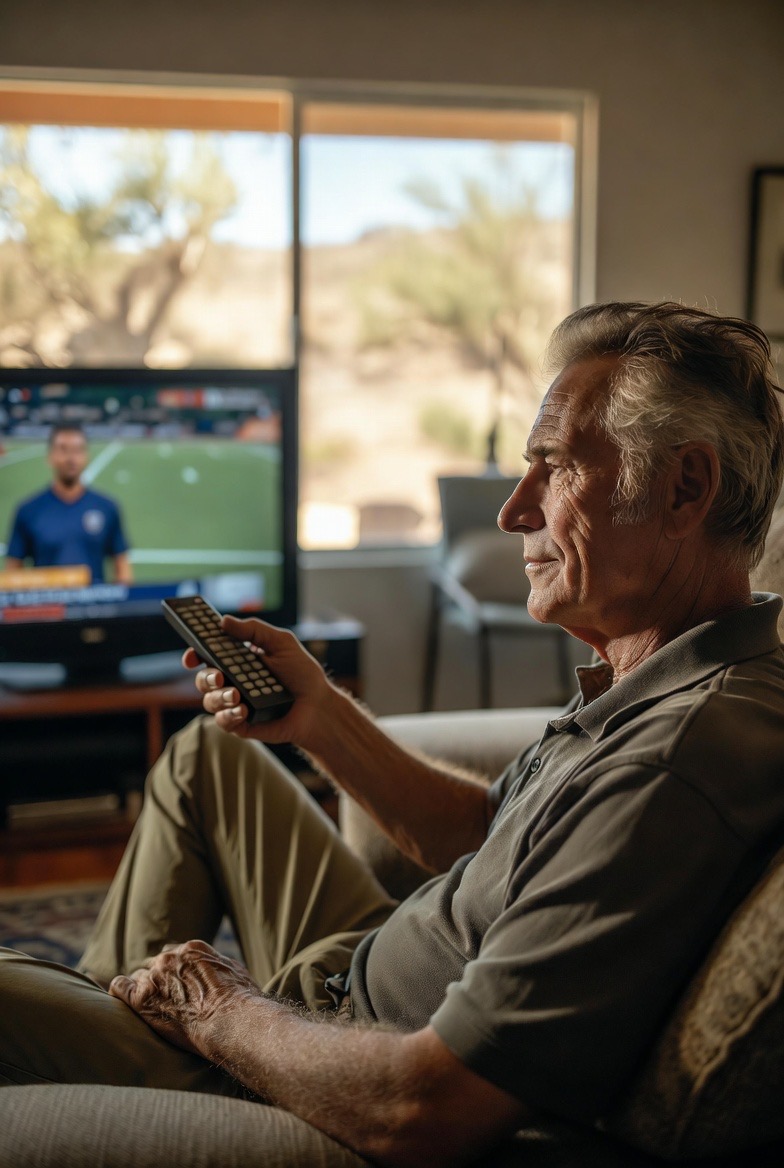
Indian Wells is known for the BNP Paribas Open and the country clubs. What gets less attention is the community itself: approximately 5,700 year-round residents, most of them retirement-age, many of them former physicians, attorneys, engineers, and executives who researched their retirement the same way they researched everything in their careers.
But Indian Wells is more than that reputation suggests. Yes, there are residents at The Reserve and Vintage Club. There are also schoolteachers who retired here on state pensions. People who moved from the Bay Area to be closer to grandchildren. Seasonal residents from the Midwest and Canada who spend October through April in the desert. A couple who runs a small business on Highway 111. Indian Wells may be the smallest city in the Valley, but the people who live here are more varied than the zip code implies.
What they share is a low tolerance for mediocre healthcare. They do their homework. They ask informed questions. They do not choose a surgeon based on a billboard or a magazine ad. They choose based on training, outcomes, and whether the doctor treats them as an individual.
Many of my Indian Wells patients are retired professionals who approach cataract surgery the way they approached decisions in their careers: with thorough research and pointed questions. I do not just welcome that. I prefer it.
If you want to discuss IOL material differences, posterior capsule management, or the decision framework for EDOF versus multifocal lenses, I can hold that conversation. If you want a surgeon who explains things at whatever level of detail you need, whether that is "tell me the bottom line" or "walk me through the biomechanics," that is how I practice.
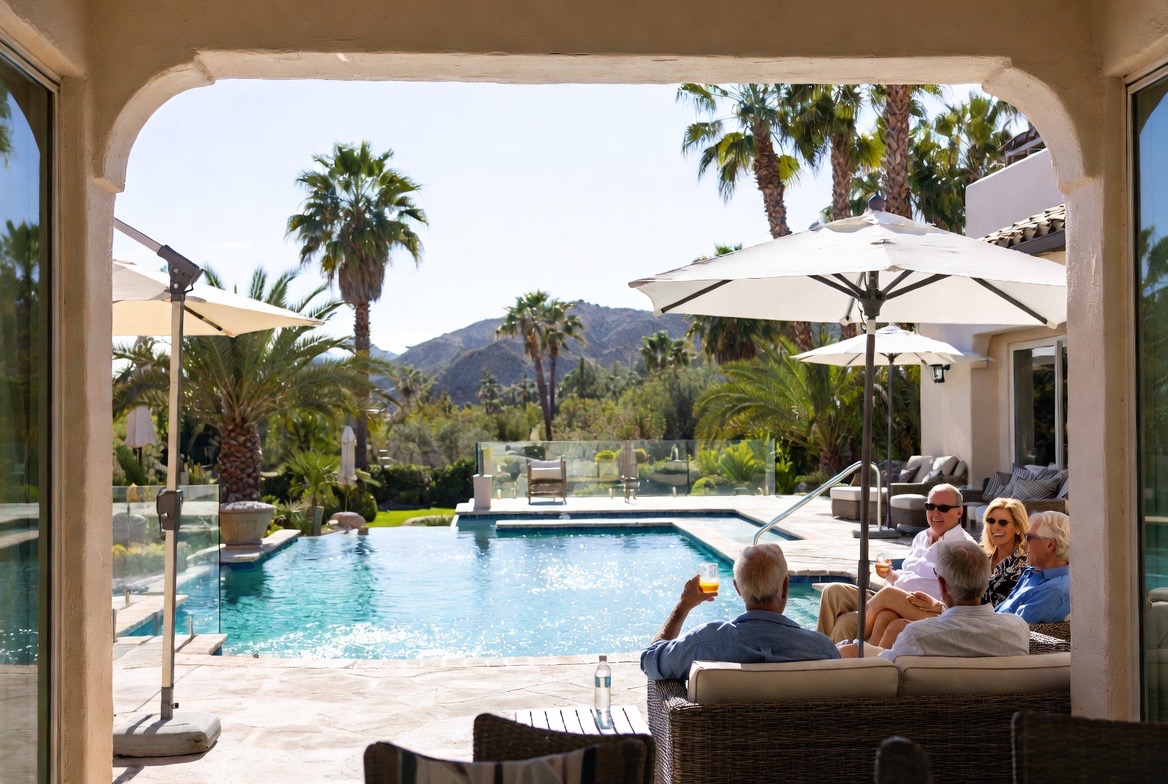
This is not about flattering Indian Wells residents. It is about matching the consultation to the patient. A retired cardiologist asks different questions than a retired schoolteacher, and both deserve answers that actually address what they want to know. My job is to provide the clinical expertise and then let you make an informed decision.

Indian Wells residents have means. You could fly to UCLA's Stein Eye Institute, to Bascom Palmer in Miami, or to any of the premium eye centers in Beverly Hills. Some of my patients considered exactly that before coming to me. Here is what they found:
The training that separates a truly skilled cataract surgeon from an adequate one is not geography. It is lineage. I trained under Dr. Howard Gimbel at Loma Linda University. Gimbel's contributions to phacoemulsification technique and capsulorrhexis are foundational to modern cataract surgery worldwide. After residency, I completed a retina fellowship, giving me training across the full anatomy of the eye, something most cataract-only surgeons do not have.
That level of training exists 10 minutes from your home, in a physician-owned practice where I perform every surgery personally, you never wait hours, and your care is not shaped by a corporate scheduler or a private equity mandate.
Patients come to Desert Vision Center because of reputation and outcomes, not because of financial referral arrangements. That independence is central to how I practice.
I perform every surgery personally. No residents, no fellows, no handoffs. The surgeon who evaluates your eyes is the surgeon in the operating room. Every time.
Patients other surgeons have declined, prior surgical complications, dislocated lenses, eyes with multiple conditions. These cases are not occasional. They are a core part of my practice.
Indian Wells has a large population of seasonal residents who arrive in October and head home in April or May. Many of them are at the age where cataracts are developing, and they want their surgery done here, during season, with a surgeon they can see for follow-up visits before they leave.
CLEAR in a Day, same-day bilateral cataract surgery for eligible patients, is especially valuable for seasonal residents. Both eyes treated in a single visit means your recovery happens during your desert stay. You see me for follow-up while you are still here. By the time you head back to Chicago, Minneapolis, or Toronto, your vision is settled and stable.
I work with seasonal patients on scheduling that fits their calendar. If you arrive in November and want surgery scheduled for early December so follow-ups are complete by February, we can plan that. The key is not to wait until March and then rush.

For Indian Wells patients who are considering premium lens implants, the lens conversation is where the real expertise shows. This is not a menu you pick from. It is a clinical decision built on detailed evaluation of your eye anatomy, your visual priorities, and the honest assessment of what each lens can and cannot do.
I also manage complex cases: patients with previous LASIK, previous retina surgery, dislocated lenses, glaucoma, and other conditions that require surgical judgment beyond standard cataract technique. Complex case expertise.
The cliche version of this section would mention the tennis ball and the golf ball. Here is the version for people who actually live in Indian Wells:
Reading the small print on your investment statements without reaching for a magnifier. Recognizing a friend across the dining room at Vue or Siena. Driving comfortably at dusk on Highway 111 when the headlights start to glare. Watching the sunset from your patio and seeing every color gradient instead of a washed-out blur. Enjoying the concert series at Indian Wells City Park without squinting at the performers.
These are not luxury concerns. They are the daily texture of a life well-lived, and cataracts gradually erode every one of them. The surgery to fix it takes 10 to 15 minutes per eye. The impact lasts the rest of your life.

You do not need to fly anywhere. Ten minutes from Indian Wells, a fellowship-trained surgeon with 20,000+ cases, no corporate pressure, no referral arrangements, and the ability to hold whatever level of conversation your questions require.
Dr. Tokuhara trained under Dr. Howard Gimbel, whose contributions to phacoemulsification are foundational to modern cataract surgery worldwide. He completed an additional retina fellowship. This level of training, combined with 20,000+ surgeries, is 10 minutes from Indian Wells in a practice where he performs every surgery personally.
Yes. Schedule surgery early in your season (November or December) and follow-up visits are complete well before you head home. CLEAR in a Day allows both eyes in a single visit for faster overall recovery.
Absolutely. Dr. Tokuhara welcomes technical conversations about IOL materials, surgical technique, and clinical decision-making. Many Indian Wells patients are retired healthcare professionals or researchers who appreciate that level of dialogue.
No. Patients come to Desert Vision Center based on reputation and outcomes, not financial referral arrangements. This independence is a deliberate feature of how the practice operates.
No referral is needed. Many Indian Wells patients self-refer after independent research. Call 760.340.4700 or use the online contact form.
Desert Vision Center is located at 35900 Bob Hope Drive, Suite 175, Rancho Mirage, CA 92270. From Indian Wells, the drive is approximately 10 minutes.
From central Indian Wells: Head northwest on Highway 111 through Palm Desert toward Rancho Mirage. Turn right onto Bob Hope Drive. The office is on your right along the Eisenhower health corridor.
From the Indian Wells Tennis Garden area: Take Miles Avenue or Washington Street north to Highway 111, then head west toward Rancho Mirage.
Ample parking directly in front of the building. Post-operative follow-up visits are typically brief, and the 10-minute drive makes the entire surgical experience convenient.
Fellowship-trained under Dr. Howard Gimbel. Retina fellowship. 20,000+ surgeries. Physician-owned, independent, no referral arrangements. Schedule your consultation.