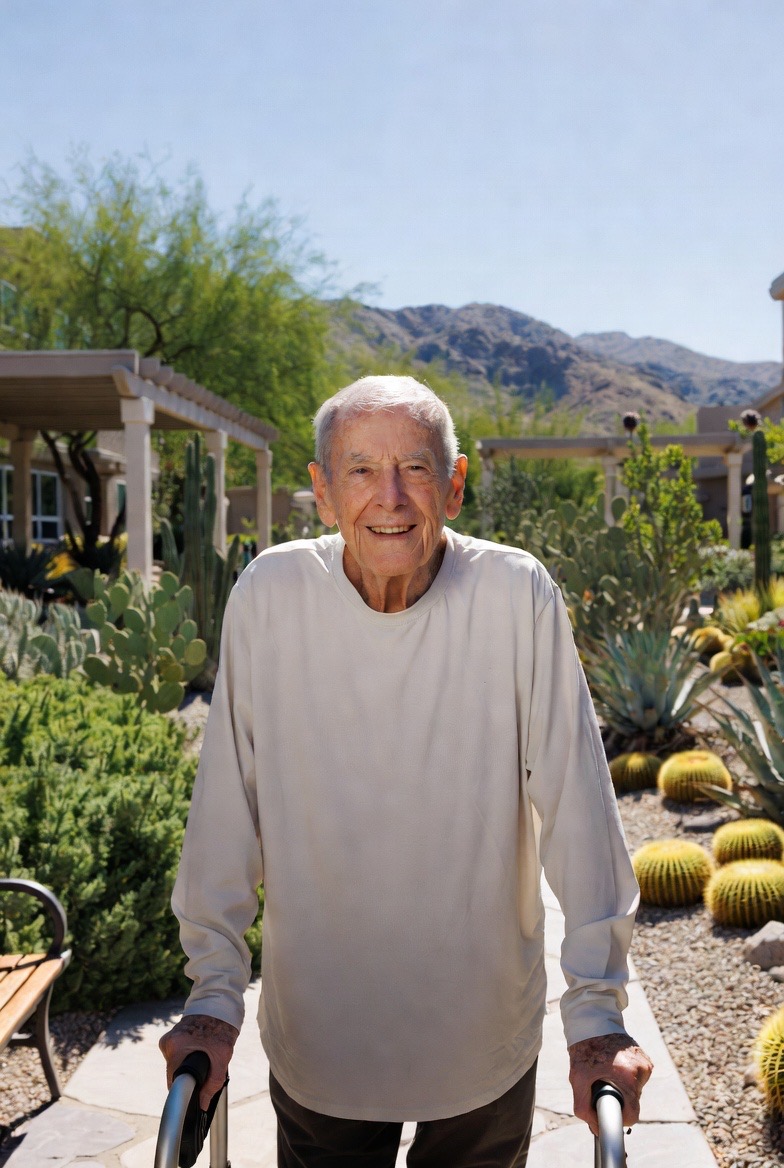
This story took place nearly twenty years ago.
I have performed thousands of cataract surgeries since then. I have met patients from every walk of life. Most memories fade with time, replaced by the next clinic day, the next surgery, the next patient.
Yet every so often, I find myself thinking about one man.
I do not know where he is today.
In fact, I never saw him again after those first few postoperative visits.
But for some reason, his story has stayed with me.
When I first met him, he had been living with severe cataracts for years. His vision had deteriorated to the point that he could only count fingers. He was effectively blind.
He was also homeless.
At every preoperative visit, he was accompanied by his girlfriend. She helped him get where he needed to go and made sure he arrived safely to his appointments. Together, they navigated a world that he could barely see.
Eventually, we scheduled cataract surgery.
The next day he returned to the office.
I will never forget the smile.
His vision had improved from count fingers to 20/20 overnight.
As cataract surgeons, we see dramatic improvements all the time. But every now and then, a patient reminds you just how profound sight really is.
For the first time in years, he could see faces. He could see signs. He could see details. He could see the world around him clearly again.
A week later he returned to the office.
The excitement had worn off.
He was upset because I would not sign paperwork stating that he was legally blind. I explained that with 20/20 vision in his operated eye, he no longer met the criteria. He disagreed. He still had a dense cataract in the other eye and felt that should count.
We discussed it at length, but neither of us changed our position.
He never returned to have surgery on the second eye.
And I never saw him again.
At the time, I remember feeling frustrated by how our last conversation ended.
But twenty years has a way of changing how you view things.
Looking back, I understand something I did not fully appreciate at the time. For a man without a home, that legal blindness certification may have been more than a document. It may have been connected to disability benefits, housing support, a safety net that his new 20/20 vision suddenly made him ineligible for. I gave him his sight back. He may have felt I was taking something else away.
Now, when I think back on that patient, I do not remember the disagreement. I remember the smile.
I remember the look on his face when he realized he could see again.
And I find myself wondering what happened next.
For eight years, blindness had shaped nearly every part of his life. His routines, his relationships, his dependence on others, and his expectations for the future had all been built around that reality.
Then, in a matter of minutes, that reality changed.
Not just his eyesight. His possibilities.
Did he find housing? Did he reconnect with people he had lost touch with? Did he eventually decide to have surgery on the second eye?
I honestly do not know.
As physicians, we rarely get to read the final chapter. We meet patients at a particular moment in their lives. We do our best to help them. Then they continue on their own path.
Most of the time, that is enough.
But every now and then, a patient leaves behind a question that stays with you.
This man left me with one that has lingered for nearly twenty years.
What became possible once he could see again?
I may never know the answer.
But perhaps that is why I still think about him.
The next chapter belonged to him.
If you or someone you love is living with vision loss from cataracts, the first step is a conversation.