Your cataract surgeon should be chosen for their skill, not because someone got paid to send you there.
I am going to talk about something that most surgeons avoid. Not because it is complicated, but because it is uncomfortable.
There is a financial system behind many cataract surgery referrals that patients never see. Some of these arrangements are perfectly legal. Some are not. And the difference matters, because it determines whether the surgeon you are sent to was chosen for their ability, or for their willingness to pay for the referral.

A patient I will call Mr. J came to me after being originally referred to a cataract practice over an hour away. He went to that appointment and was deeply disappointed in the experience. So he did his own research, asked his friends, and found me, right in town, just down the street.
After his surgery, 20/20 result, he asked me a simple question:
"Doctor, why was I sent all the way over there when you are right here?"
That question is more common than you might think. And the answer, in many cases, involves something called referral kickbacks.
Some cataract practices rely heavily on referrals. That in itself is not unusual. The problem begins when those referrals come with built-in financial incentives: gifts, entertainment, education sponsorships, or direct payments in exchange for sending patients to a specific surgeon.
This is illegal under the Stark Law, a federal law created to protect patients from physicians making decisions based on financial reimbursement rather than the patient's best interest.
Despite the law, it still happens.

The Office of Inspector General has begun prosecuting these arrangements aggressively. Recent settlements include:
For providing gifts, entertainment, and continuing education programs to optometrists in exchange for cataract patient referrals.
For allegations of kickbacks to referring doctors in exchange for cataract surgery referrals.
To resolve whistleblower claims about false claims to federal healthcare programs resulting from illegal kickback relationships.
These are not theoretical risks. These are real practices that were operating for years before someone spoke up.
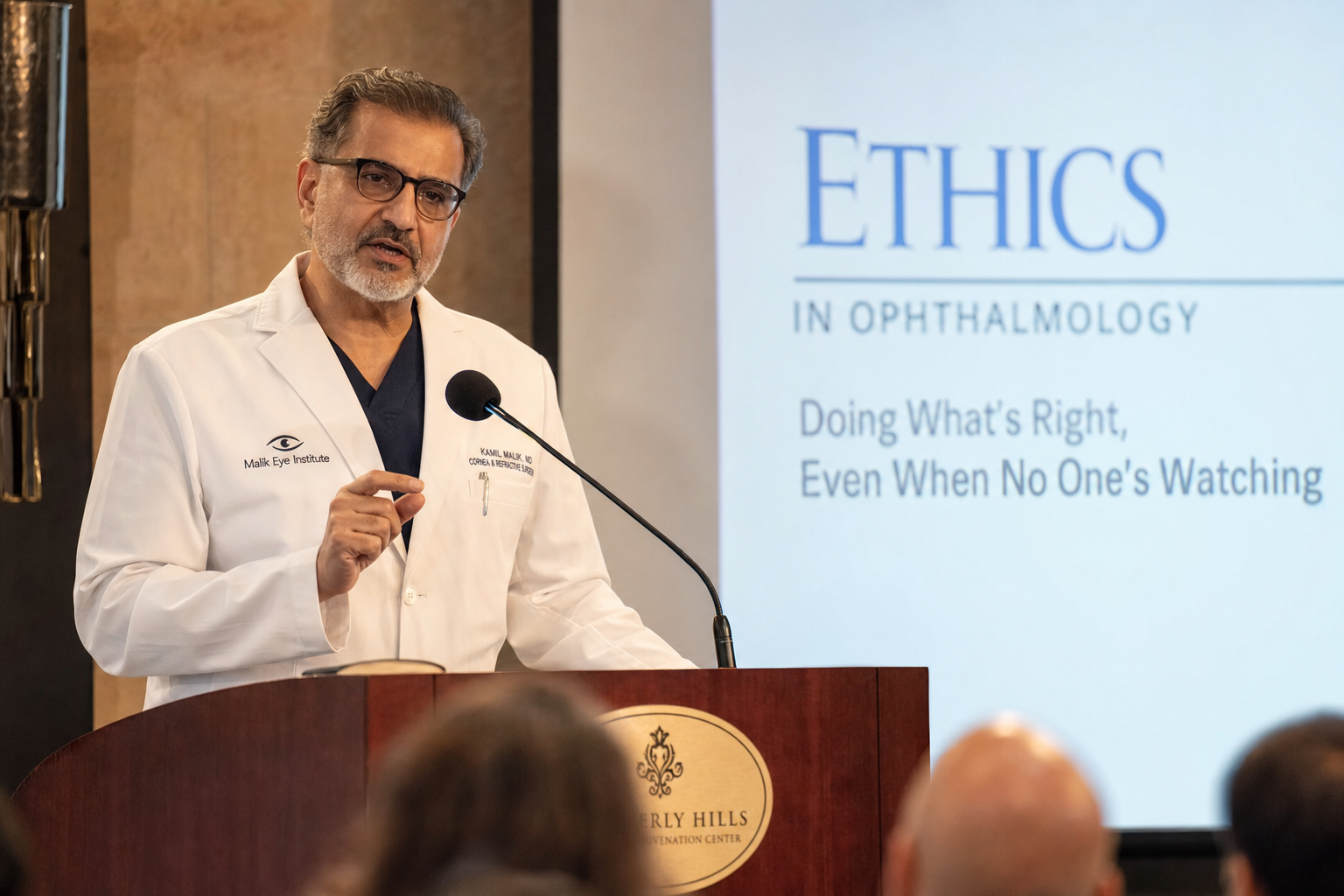
In 2025, I hosted the Stand for Ethical Eye Care seminar at Hotel Paseo in the Coachella Valley. The event brought together physicians and community members to discuss the reality of hidden kickback practices in eye care.
At that event, I signed the Ethical Cataract Care Contract, a public pledge to oppose financial incentives that influence surgical referrals. Other local doctors joined me in that commitment.
KESQ News coverage of the Stand for Ethical Eye Care seminar.
"If we don't speak out, the kickback process will become the norm. The idea is to flip the script. If we can empower patients to know what questions to ask and how to navigate a system where monetary influences exist, we will have much better patient trust."
When you receive a referral for cataract surgery, you have every right to ask questions:

My full explanation of cataract referral kickbacks, the Stark Law, and what patients should know.
In my practice, most patients come by word of mouth or direct referral from friends and family. I do not participate in kickback arrangements. I never have. I believe the doctor-patient relationship is sacred, and financial incentives that distort referrals erode the very foundation of trust that medicine depends on. That is why I speak publicly about this. Not to point fingers, but to give patients the information they need to make truly independent choices about their care.