Lens Implants Explained

There is no "best" lens. There's only the best lens for how you live. Here's how to think about it.

Dr. Tokuhara with advanced diagnostic equipment at Desert Vision Center
Lens selection starts with precise measurements - the right data leads to the right choice.

During cataract surgery, your clouded natural lens is removed and replaced with an artificial lens implant - called an intraocular lens, or IOL. This lens is permanent. It's the one decision in cataract surgery that stays with you for the rest of your life.

That's why this conversation matters. And that's why I want to be honest with you: choosing a lens is not about features. It's about tradeoffs. Every lens gives you something and asks you to accept something in return. The goal is to find the match that fits your life - not the one that sounds the most impressive.

Monofocal Lens

The reliable foundation. Covered by insurance.

A monofocal lens gives you clear vision at one distance. Most patients choose distance - sharp for driving, television, walking around. You'd wear reading glasses for close work.

But here's something that doesn't get enough airtime: a monofocal lens aimed at near vision is a perfectly valid choice. I had a patient - an avid reader, 81 years old - who had delayed surgery for years because she believed reading glasses were mandatory after cataract surgery. No one had told her we could aim the lens for reading instead.

When I explained the option, she didn't just feel relieved. She was excited. Not because of premium technology, but because the plan matched her life. She reads for hours every day. That's who she is. The lens should reflect that.

What you get: Excellent clarity at your chosen distance. Reliable. Proven. Fully covered by insurance.

What you accept: Glasses for the other distance. If you pick distance, you need readers. If you pick near, you need glasses for driving.

Best for: Patients who don't mind glasses for some tasks and want the most predictable outcome. Patients with strong near-vision identity (readers, craftspeople, artists).

Toric Lens

For patients with astigmatism. Sharper uncorrected vision.

If you have astigmatism - an irregular curvature of the cornea - a standard lens won't fully correct it. A toric lens is designed to compensate for that shape, giving you sharper vision without glasses at your chosen distance.

An important clarification: a toric lens reduces astigmatism. It does not eliminate it completely. Some residual astigmatism is possible even after a perfectly executed surgery. Most patients are very happy with the result, but I want you to have realistic expectations going in.

What you get: Significantly sharper distance vision without glasses if you have astigmatism. Works with your eye's specific shape.

What you accept: Still a single-focus lens - you'll need readers for close work. Premium cost above insurance coverage.

Best for: Patients with moderate to significant astigmatism who want the clearest possible distance vision without glasses.

Extended Depth of Focus (EDOF)

A wider range of clear vision. A modern middle ground.

EDOF lenses stretch your focus from distance through intermediate - roughly arm's length. That means driving, cooking, using a computer, and reading your phone are all clearer without glasses. Fine print and prolonged close reading may still benefit from light readers.

I think of EDOF as the practical choice for patients who want freedom from glasses in most daily situations but don't want to trade visual quality for the sake of doing everything without glasses. It's a balance, and for many patients, it's the right one.

What you get: Good distance and intermediate vision. Less dependence on glasses for most activities. Lower risk of halos and glare compared to multifocal.

What you accept: Small print and close-up detail work may still need readers. Not as strong at near as multifocal. Premium cost.

Best for: Active patients who use computers, cook, and drive - and who value visual quality over total glasses independence.

Multifocal Lens

The closest to glasses-free at all distances. With tradeoffs.

Multifocal lenses split incoming light to create multiple focal points - distance, intermediate, and near - simultaneously. The result: many patients rarely or never need glasses for any task.

But here's the tradeoff nobody mentions in the marketing: splitting light means each focal point gets less of it. Some patients notice halos around lights at night, or a slight reduction in contrast - especially in dim conditions. For most people, the brain adapts over weeks or months and it stops being noticeable. For a small percentage, it remains bothersome.

I don't discourage multifocal lenses. I recommend them often, and most patients are thrilled. But I want every patient to understand that the trade for glasses-freedom is a slight change in visual quality - particularly at night. If that sounds acceptable, it probably is. If it sounds concerning, we should talk about it.

What you get: The best chance at functional vision at all distances without glasses. Freedom for reading, driving, and everything in between.

What you accept: Possible halos and glare, especially at night. Slight contrast reduction in dim light. Premium cost. Not ideal for patients with other eye conditions (macular degeneration, advanced glaucoma).

Best for: Patients who strongly dislike wearing glasses, have healthy eyes beyond cataracts, and are comfortable with the adaptation period.
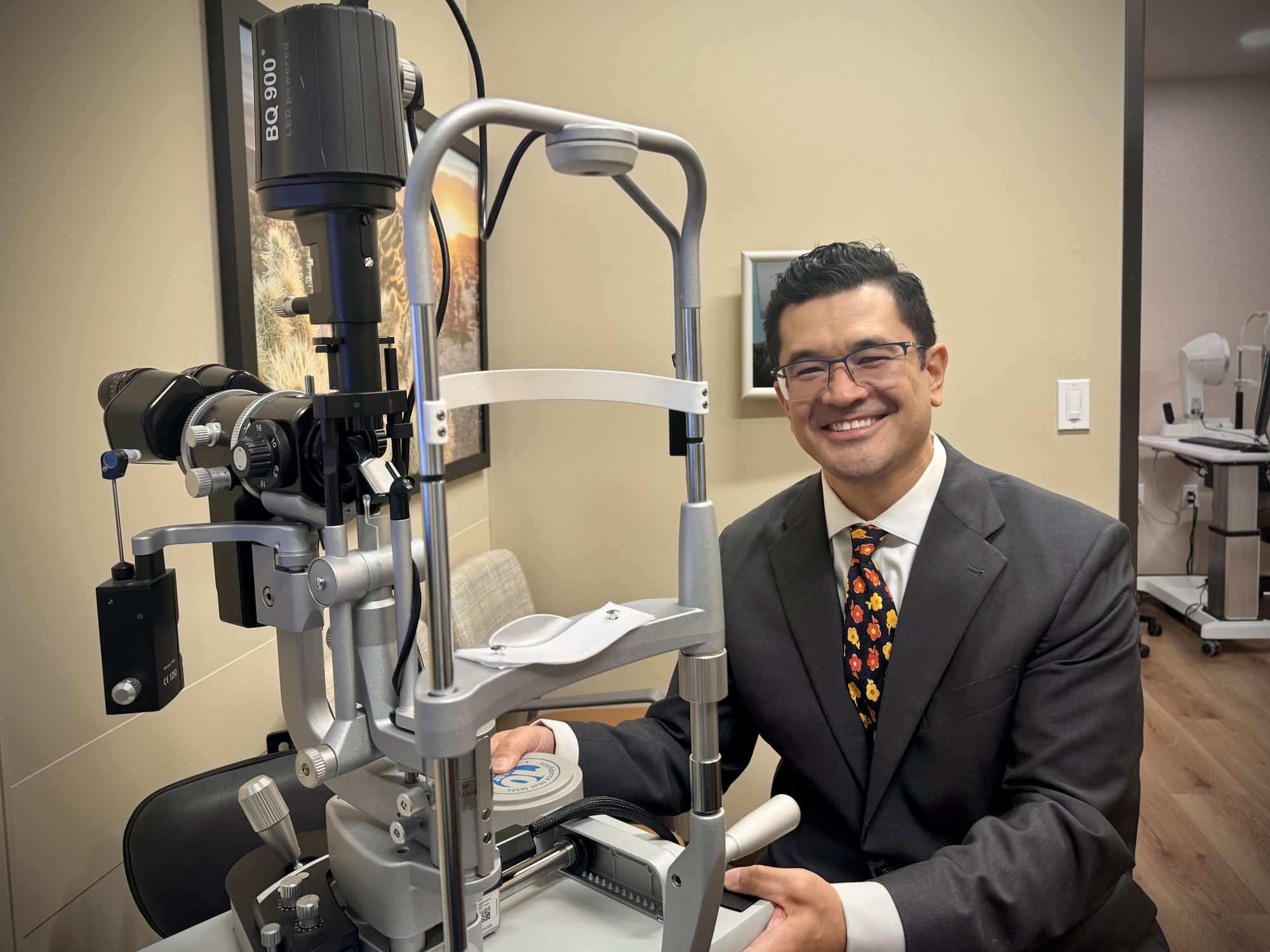
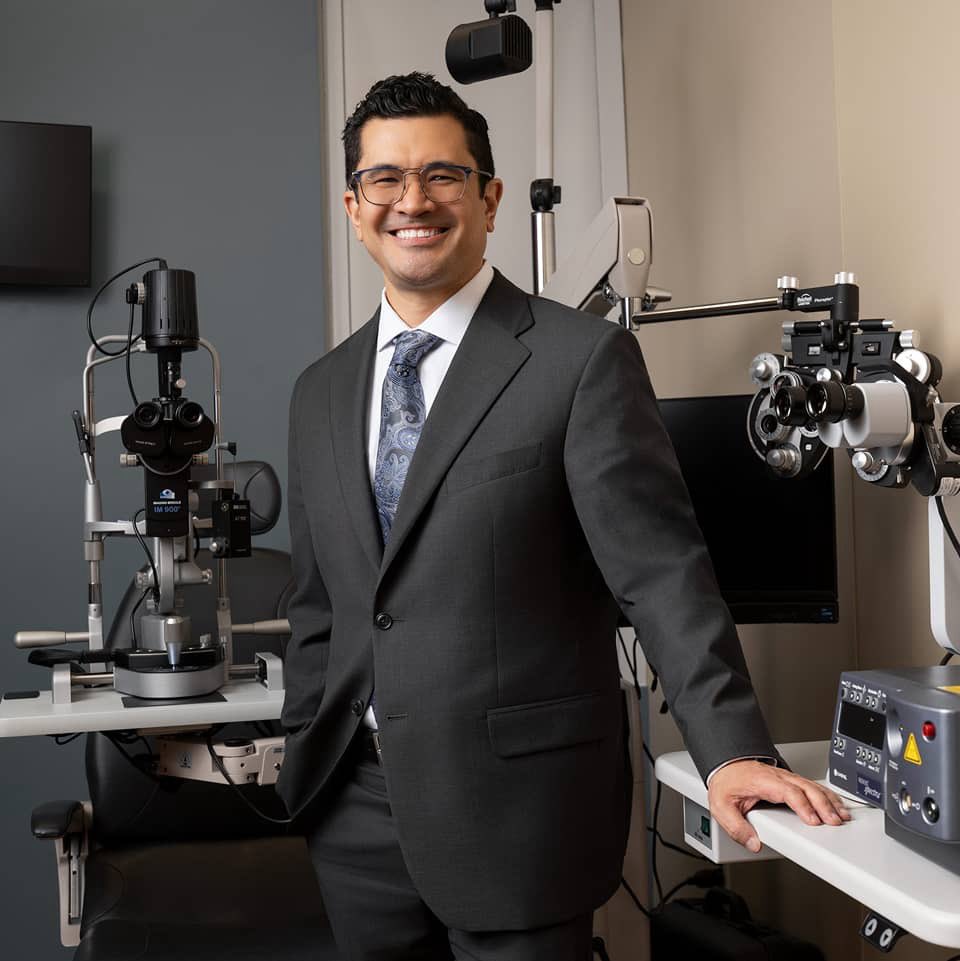
Patient feeling reassured about his lens implant options

How I Think About It

When I sit with a patient and we talk about lenses, I'm not thinking about what's newest or most expensive. I'm thinking about their life. How they spend their day. What frustrates them about their current vision. What they're afraid of losing.

Some of my most satisfied patients chose the simplest lens - because it was the right one for them. Lens selection is not about maximizing features. It's about minimizing the gap between what you expect and what you experience.

If you leave a consultation feeling confused or pressured, that's not a reflection of you - it's a sign the conversation wasn't focused on the right things.

A thought from the clinic

Cataract surgery is not just removing opacity. It's negotiating identity, habits, and expectations. Patients are choosing between versions of their future self. Education isn't about listing options - it's about giving permission to choose the one that fits.

Learn More