The Procedure

Laser vs Traditional Cataract Surgery: What's the Real Difference?

The laser is a tool, not a guarantee.

If you are researching cataract surgery, you have almost certainly come across the phrase "laser cataract surgery." It sounds impressive. It sounds modern. It sounds like it must be better. And many practices market it exactly that way, as a premium upgrade that gives you the best possible outcome.

The reality is more nuanced. The femtosecond laser is a genuinely useful tool. In certain situations, it adds measurable precision. But it has not been proven to deliver consistently better outcomes than skilled manual surgery. And the marketing around it often creates confusion that patients deserve to have cleared up.

I offer both laser-assisted and traditional cataract surgery. I am not trying to sell you one over the other. I am trying to help you understand what each approach actually involves so you can make a decision based on facts rather than branding.
What Traditional Cataract Surgery Looks Like

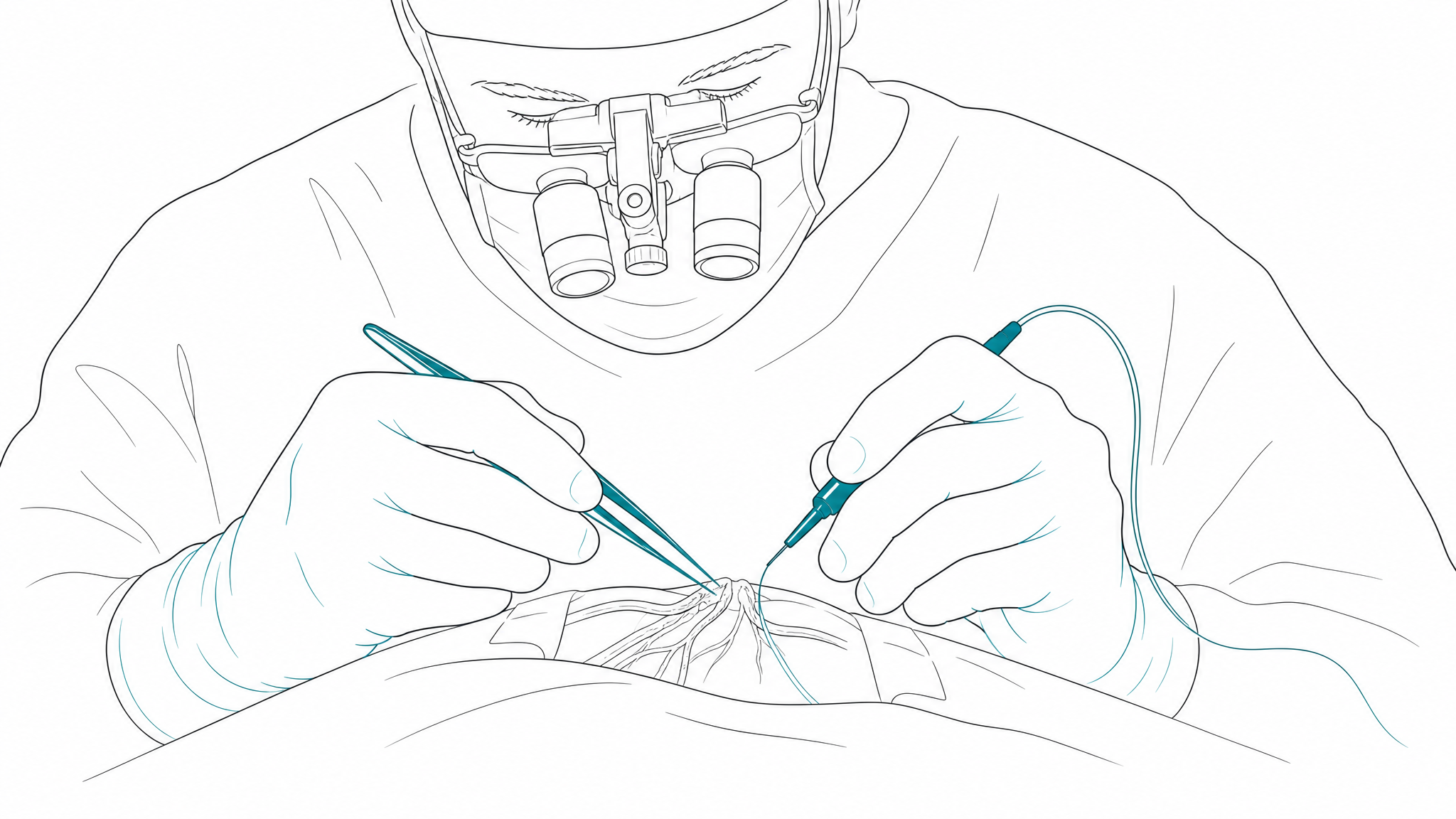
In traditional cataract surgery, also called phacoemulsification, the surgeon makes a small corneal incision by hand using a precision blade. Through that incision, the surgeon creates a circular opening in the thin capsule that surrounds the lens. This step is called a capsulotomy, and it is one of the most important parts of the entire procedure.

Once the capsule is open, the surgeon uses an ultrasound device to break apart the cloudy lens and gently suction it out. A new artificial lens implant is then folded, inserted through the same small incision, and positioned inside the capsular bag. The incision is self-sealing. No stitches are typically needed. The procedure takes 10 to 15 minutes.

This technique has been refined over decades. It is the most commonly performed surgery in the world. Millions of patients have excellent outcomes with traditional manual surgery every year.

Traditional cataract surgery is not outdated. It is one of the most successful surgical procedures in all of medicine, with a long track record of safety and excellent visual outcomes.

What the Femtosecond Laser Actually Does

The femtosecond laser can perform three specific steps that the surgeon would otherwise do by hand:

After these laser-assisted steps, the surgeon takes over. The cataract material still needs to be removed. The new lens still needs to be implanted and positioned. Any unexpected findings still need to be managed in real time. The laser does not perform the surgery. It assists with the opening steps.

The laser can also create precise corneal relaxing incisions to help reduce mild astigmatism, which can be useful in certain patients.

Where the Laser Helps

I want to be fair to the technology. The femtosecond laser does offer genuine advantages in specific situations.

The laser-created capsulotomy tends to be more perfectly circular and centered than one made by hand. For certain premium lens implants, particularly toric lenses that reduce astigmatism and Extended Depth of Focus lenses, precise capsulotomy centration can improve the optical performance of the implant. A well-centered capsulotomy keeps the lens in optimal position as the capsule contracts over time.

For very dense cataracts, pre-fragmenting the lens with the laser can reduce the total ultrasound energy used inside the eye. Less ultrasound energy generally means less stress on the corneal cells. In patients who already have compromised corneas or low endothelial cell counts, this can be a meaningful benefit.

"The laser adds precision to specific steps. Whether that precision translates to a better outcome depends on the eye in front of me."

These are real, measurable advantages. They are not imaginary. But they are situational, not universal.

Where the Marketing Gets Ahead of the Evidence

Here is where the honest conversation needs to happen.

Multiple large-scale clinical studies have compared laser-assisted cataract surgery to traditional manual surgery. The results are remarkably consistent: there is no statistically significant difference in final visual acuity between the two approaches. Patients who receive laser-assisted surgery do not see better, on average, than patients who receive skilled manual surgery.

The laser creates a more geometrically precise capsulotomy. That is measurably true. But whether that geometric precision translates into a meaningfully different outcome for the patient depends on many other factors, including the surgeon's skill, the lens choice, the patient's healing response, and the health of the ocular surface.

Some practices market laser cataract surgery as "bladeless" surgery. This is technically accurate for the initial incision, but the phrasing implies that traditional surgery involves something frightening. It does not. The incisions in both approaches are tiny, precise, and performed under microscopic guidance. The word "bladeless" is a marketing choice, not a clinical distinction that affects your outcome.

The question is not whether the laser is precise. It is. The question is whether that precision, in your specific case, produces a meaningfully better result than what a skilled surgeon achieves by hand. For many patients, the honest answer is that the difference is minimal.

The Surgeon Matters More Than the Tool

This is the part that gets lost in the laser conversation, and it may be the most important thing I can tell you.

A highly experienced surgeon performing traditional cataract surgery will consistently produce better outcomes than an inexperienced surgeon using a femtosecond laser. The tool does not replace the judgment. It does not replace the thousands of hours of training. It does not replace the ability to adapt in real time when something unexpected happens.

I have performed over 20,000 cataract and lens procedures. My capsulotomies by hand are well-centered and appropriately sized. My corneal incisions are consistently precise. That is not a boast. It is the result of doing this work for decades. The laser can match the precision of experienced hands, but it cannot exceed it in ways that change your outcome.

What the laser cannot do is manage a complication. If the capsule tears, the laser is irrelevant. If the zonules are weak, the laser cannot adapt mid-procedure. If the cataract behaves differently than the imaging predicted, the laser cannot make a judgment call. Only the surgeon can do those things. And those are the moments that actually determine whether your surgery goes well.

"When you choose cataract surgery, you are choosing a surgeon. Not a machine."

The Cost Conversation

Laser-assisted cataract surgery typically involves an additional out-of-pocket cost to the patient. Insurance covers the standard cataract procedure, but the laser component is usually considered an elective upgrade and is not covered.

This means you are paying extra for the laser step. That is a perfectly reasonable investment if the laser provides a meaningful benefit for your specific situation. But it is not a reasonable investment if it is being recommended as a blanket upgrade for every patient regardless of their anatomy and lens choice.

An ethical surgeon should be able to explain exactly why the laser would benefit your particular eye. If the explanation is vague, if it amounts to "it is the latest technology" or "it is what we recommend for everyone," that is a signal to ask more questions.

How I Decide

I do not have a default recommendation. I have patients with specific eyes, specific cataracts, specific visual goals, and specific anatomy. My recommendation depends on what I find during the examination.

When I tend to recommend laser assistance:

When traditional surgery is typically the right call:

This is how individualized care works. The recommendation follows the eye, not the marketing plan.

What to Ask Your Surgeon

If a surgeon recommends laser-assisted cataract surgery, here are the right questions to ask:

A confident, experienced surgeon will welcome these questions. They will give you specific, personalized answers. If the answer is essentially "the laser is just better," keep asking. Or get a second opinion.

The femtosecond laser is a sophisticated, useful tool. It is not a replacement for surgical experience, clinical judgment, or honest communication. The best cataract surgery, whether laser-assisted or traditional, is the one performed by a surgeon who has the training to handle anything, the judgment to recommend the right approach for your eye, and the honesty to tell you when the premium option is not worth it.

A thought from the clinic

I have seen patients spend hours researching which laser platform a practice uses. They compare femtosecond wavelengths and pulse rates like they are shopping for a television. And then they spend five minutes evaluating the surgeon who will be guiding the entire procedure. The laser will never make a judgment call about your capsule. It will never calm you when you are nervous on the operating table. It will never adapt when your eye does something nobody predicted. Your surgeon will. That is where your research should start and, honestly, where most of it should stay. The technology matters. But the hands and the mind behind the technology matter more.

Related Reading

Ready to Talk?

If you are weighing laser versus traditional cataract surgery and want a recommendation based on your eyes, not a sales pitch, I would welcome the conversation.

Schedule a Consultation