Post-Surgical Care

Eye Drops After Cataract Surgery: What They Do and How to Use Them

Three bottles, different schedules, a taper that changes every week. Here is what each drop does and how to get through the process without confusion.

You leave the surgery center with a clear shield over your eye and a small bag of eye drops. For the next several weeks, those drops are the most important part of your recovery. They are doing the work you cannot see.

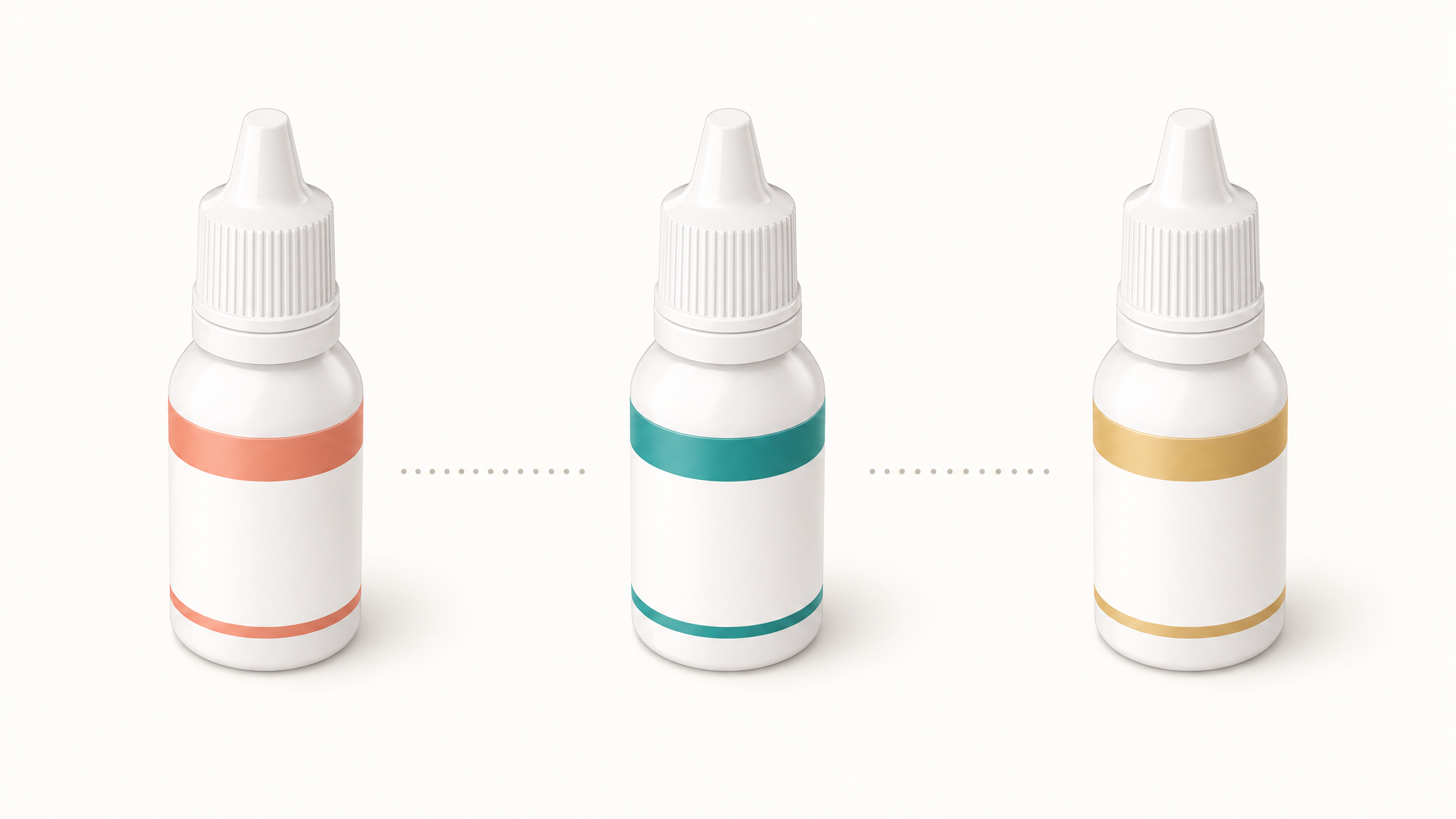
Most patients are fine with the idea of using eye drops. The confusion starts when they get home and line up two or three bottles on the counter, each with a different name, a different cap color, and a different schedule. Which one is which? Does the order matter? What if I miss one? How long do I keep doing this?

These are the most common questions I hear during the first week of recovery. And they are good questions, because the drop schedule is one of the few things patients are responsible for managing on their own after surgery. Here is how I explain it.

Why You Need Drops at All

Cataract surgery is a controlled procedure, but it is still surgery. Your body responds to any surgery with inflammation, which is the immune system's way of recognizing that something has changed. That inflammatory response is normal, but if it goes unchecked during the healing window, it can cause discomfort, blurred vision, and in rare cases, complications like elevated eye pressure or swelling in the retina.

The drops also protect against infection. The incision used in modern cataract surgery is small, typically about 2.4 millimeters, and it seals on its own without stitches. But until it fully closes, the eye is vulnerable. Antibiotic drops provide a layer of protection during that critical window.

In short: the drops control inflammation and prevent infection while your eye heals. They are not optional, and they are not interchangeable. Each one does something different.

The Three Categories of Drops

Illustration of post-operative eye drop bottles used after cataract surgery

The Antibiotic

This drop prevents bacterial infection during the early healing period. You will typically use it for one to two weeks after surgery. It is the first drop to start and the first to stop. Once the incision has sealed and the risk of infection has passed, the antibiotic is no longer needed.

Some patients worry about stopping it "too soon." Follow your surgeon's instructions. Antibiotics are not meant to be used long-term in the eye, and extending them beyond the prescribed period does not add protection.

The Steroid

This is the workhorse of your post-operative drops. The steroid controls the inflammatory response, keeping redness, swelling, and discomfort in check while the eye heals. It follows a tapering schedule, meaning you start at a higher frequency, typically four times a day, and gradually reduce over several weeks.

The taper exists for a reason. Stopping a steroid abruptly can cause a rebound flare of inflammation. Think of it like slowly turning down a dial rather than flipping a switch. Your surgeon will tell you exactly when to reduce and when to stop. Even if the eye feels perfectly fine, do not skip ahead.

The most common mistake I see with post-operative drops: patients stop the steroid early because the eye feels good. The eye feels good because the steroid is working. Keep using it for the full course.

The NSAID (Nonsteroidal Anti-Inflammatory)

This drop works alongside the steroid but through a different mechanism. Its primary role is preventing cystoid macular edema, a type of microscopic swelling in the central retina that can temporarily blur vision. Cystoid macular edema is uncommon, but when it happens, it is frustrating because it can develop weeks after an otherwise perfect surgery.

The NSAID is your insurance policy against that. Most surgeons prescribe it for four to six weeks after surgery. Some patients notice a mild stinging sensation when they put it in. That is normal and usually lasts only a few seconds.

You may have heard that some surgeons have moved away from NSAIDs because of the risk of corneal irritation, including a rare but serious condition called corneal melting. That concern is valid, and in certain patients it makes sense to omit them. However, many of the patients I operate on are higher-risk: complex cases, patients with previous surgeries, retina patients, or eyes with a history of inflammation. For these patients, the anti-inflammatory protection that NSAIDs provide is important. I only omit NSAIDs when there is a specific reason not to use them. It is a thoughtful, patient-by-patient decision rather than a blanket policy.
Simplifying the Regimen: Compound Drops

Three separate bottles, three different schedules, five minutes between each one. It is a lot to manage, especially during the first week when everything is new. That is why we use compounded combination drops whenever possible.

A compounded drop combines all three medications, the antibiotic, the steroid, and the NSAID, into a single bottle. Instead of juggling three bottles with different cap colors and different schedules, patients use one drop on one schedule. It dramatically simplifies the process.

The clinical rationale is straightforward: fewer bottles means fewer opportunities for confusion, fewer missed doses, and better overall compliance. When patients do not have to remember which bottle is which or worry about spacing three drops five minutes apart, they are more likely to stay on track through the full course of treatment.

Compound drops are not available at every pharmacy. They are prepared by a compounding pharmacy that combines the medications to order. We coordinate this so the drops are ready for you before surgery day. If you have questions about whether your regimen will use a compound drop, ask us at your pre-operative visit.

Reducing the Drop Burden: Dextenza

Another way we reduce the number of drops patients need is with Dextenza, a tiny steroid implant placed in the tear duct during surgery. It is about the size of a grain of rice, and patients do not feel it.

Dextenza delivers a sustained dose of dexamethasone (a steroid) directly to the eye surface over approximately 30 days. Because the steroid component is handled by the implant, patients can skip weeks of steroid drops entirely. You will still use some drops after surgery, but the overall drop burden is significantly lighter.

The implant dissolves on its own and does not need to be removed. For patients who have difficulty instilling drops, who travel frequently, or who simply prefer a simpler recovery, Dextenza is a meaningful improvement over the traditional all-drops approach.

Not every patient is a candidate, and we will discuss whether Dextenza makes sense for your situation during your pre-operative planning. But for many patients, it is one of those advances that makes the recovery noticeably easier.

The Taper Schedule in Plain Language

Every surgeon's schedule is slightly different, but the general pattern looks something like this:

Week 1: All drops at their highest frequency. You might be using each drop three to four times a day, spaced throughout the day. This is the busiest part of the schedule, but it is also the most important. Your eye is in its earliest stage of healing.

Week 2: The antibiotic usually stops. The steroid may reduce from four times a day to three. The NSAID typically stays the same or reduces slightly.

Weeks 3 and 4: The steroid continues to taper, often down to twice a day, then once a day. The NSAID continues at a steady pace.

Weeks 5 and 6: Most patients are down to one or two drops a day, finishing out the tail end of the steroid and NSAID taper. By the end of this period, drops are usually done.

Your surgeon may adjust this timeline based on how your eye responds. Some patients heal quickly and taper faster. Others, particularly those with a history of inflammation or diabetes, may need a longer course. The schedule is a guide, not a rigid protocol. Follow what your surgeon tells you at each follow-up visit.

Common Mistakes (and How to Avoid Them)

Putting drops in back to back

If you use two drops within seconds of each other, the second one washes out the first before it can absorb. Space your drops at least five minutes apart. Set a timer on your phone if it helps. The five-minute gap is not a suggestion. It is how long the eye needs to absorb each drop.

Touching the tip of the bottle to the eye

The bottle tip should never contact your eye, your eyelashes, or your skin. Contaminating the tip introduces bacteria into the bottle, which defeats the purpose of using the drops in the first place. Hold the bottle about half an inch above the eye and let the drop fall in. If your hands are unsteady, rest the hand holding the bottle against your forehead for stability.

Stopping early because the eye feels fine

I mentioned this above, but it bears repeating. The eye feels fine because the drops are working. Inflammation can return if the steroid is stopped too soon. Cystoid macular edema can develop weeks later if the NSAID is cut short. Finish the course.

Not washing your hands before instilling drops

Every time you touch the bottle and bring your hands near your eye, you are introducing whatever is on your fingers. Wash your hands with soap and water before every drop session. It takes 20 seconds and eliminates a meaningful source of contamination.

"The drops are not complicated. They just feel complicated during the first few days because everything is new. Once you settle into the routine, most patients tell me it becomes automatic within a week."

Can I Use Artificial Tears Too?

Yes. Preservative-free artificial tears are not only safe during recovery, they are often helpful. Many patients experience some dryness or a gritty sensation after cataract surgery, partly from the drops themselves and partly from the healing process. Artificial tears provide comfort without interfering with your prescription drops.

The key word is preservative-free. Preserved artificial tears contain chemicals like benzalkonium chloride that can irritate a healing eye. Look for single-use vials or bottles labeled "preservative-free." And space them at least five minutes from your other drops, just like everything else.

Avoid any drop marketed as a redness reliever. These contain vasoconstrictors that shrink blood vessels temporarily but can cause rebound redness and may interfere with normal healing.

Technique Matters

Many patients have never used eye drops before surgery. Here is the technique I recommend:

Wash your hands. Tilt your head back or lie down. Pull your lower eyelid down gently with one finger to create a small pocket. Hold the bottle above the eye, about half an inch away, and squeeze one drop into that pocket. Close your eye gently for about 30 seconds. Do not blink rapidly. Do not squeeze the eye shut. If the drop lands on your eyelid instead of in the eye, that is fine. Try again. With practice, it gets easier.

Some patients press gently on the inner corner of the eye (near the nose) after instilling a drop. This slows drainage through the tear duct and helps the drop stay on the eye surface longer. It is a small thing, but it can make a difference, especially with the steroid.

A Tool That Helps

I built a free app called My Cataract Drops specifically because so many patients told me the schedule was the hardest part of recovery. The app sends push notifications when each drop is due, tracks which bottle to use, and adjusts automatically as the taper progresses. It does not replace your surgeon's instructions, but it removes the guesswork.

My Cataract Drops

Free for all Desert Vision Center patients. Push notifications for every drop, every day, through your entire recovery.

Download for iPhoneLearn More

Whether you use the app, a written chart on the refrigerator, or phone alarms, the point is the same: build a system. Relying on memory alone during a busy recovery is where mistakes happen.

A thought from the clinic

Patients sometimes apologize for asking about their drops. Which one is the antibiotic? Is this the right order? Can I use them closer together today because I woke up late? These are exactly the questions I want patients to ask. The drop schedule is the one part of your recovery that depends entirely on you. It is reasonable to want to get it right. And the truth is, getting it right is not difficult. It just takes a little attention for a few weeks. The drops do their job quietly, preventing problems you never see. That is the whole point. By the time you are done with them, you will barely remember the routine. But your eye will remember the protection.

Related Reading